Quick Answer
Cabinet refinishing costs roughly $2,000 to $7,000 for an average kitchen, or about $50 to $120 per door and drawer front. It cleans, sands, primes, and sprays a durable new finish onto your existing cabinet boxes and doors, delivering a near-new look for 50 to 70 percent less than replacement and lasting 8 to 15 years when done professionally.
Key Takeaways
- Cabinet refinishing costs about $2,000–$7,000 per kitchen, or $50–$120 per door, versus $8,000–$25,000+ for replacement.
- Refinishing keeps your existing boxes and doors; refacing replaces doors and veneers; replacement swaps everything.
- Prep is 90% of the result: thorough degreasing, sanding, and a bonding primer prevent peeling and chipping.
- Professionals spray catalyzed or urethane coatings for a smooth, washable, furniture-grade finish, not wall paint.
- A properly refinished kitchen lasts 8–15 years and is one of the highest-return cosmetic upgrades before selling.
What Is Cabinet Refinishing?
Cabinet refinishing is the process of stripping or scuff-sanding the existing surface of your kitchen or bathroom cabinets and applying a fresh, durable new coating — paint, stain, or clear finish — to the doors, drawer fronts, and visible box faces you already own. Unlike a remodel, refinishing keeps your cabinet boxes and doors in place and simply gives them a new skin. It is the single most cost-effective way to make a dated kitchen look renovated without the expense, debris, and weeks of disruption that come with tearing out cabinetry.
The appeal is simple math. The boxes inside most kitchens are structurally sound long after the finish on the doors has worn, yellowed, or gone out of style. Rather than throwing away functional cabinetry, refinishing renews the parts you actually see. The result, when done by a skilled crew, is a smooth, factory-like finish that is nearly indistinguishable from new cabinets at a fraction of the price. For many homeowners, it is the difference between living with a tired kitchen and loving the heart of their home again.
It helps to think of cabinet refinishing as a specialized branch of interior painting rather than ordinary wall painting. The surfaces are horizontal and vertical, highly visible under direct lighting, touched constantly, and exposed to grease, water, and daily abuse. That combination demands different products, different equipment, and a far more rigorous prep routine than rolling a coat of paint on a bedroom wall.
What a refinishing project typically includes
- Doors and drawer fronts — the most visible surfaces, usually removed and sprayed separately for a flawless finish.
- Cabinet box faces and ends — the visible frame and exposed sides that frame each opening.
- Trim, valances, and toe kicks — the smaller details that tie the look together.
- Hardware updates — new knobs, pulls, and sometimes soft-close hinges installed during reassembly.
- Minor repairs — filling dents, regluing loose joints, and patching old hardware holes before finishing.
Prepare a clear scope using our quote comparison checklist. Confirm service area, credentials and availability directly with any contractor. Directory listings are being restored.
Refinishing vs. Refacing vs. Replacing
Homeowners often confuse three very different kitchen projects: refinishing, refacing, and replacing. Each renews your cabinets to a different degree, at a different price, with a different timeline. Choosing the right one starts with an honest look at the condition of your existing cabinetry and your budget.
Refinishing
Refinishing reuses everything — boxes, doors, and drawer fronts — and changes only the finish on top. It is the least expensive and least disruptive option, ideal when your cabinets are well-built and you simply want a new color or a renewed surface. The layout, door style, and storage stay exactly the same; only the look changes.
Refacing
Refacing keeps the cabinet boxes but replaces the doors and drawer fronts with new ones and covers the visible box faces with a matching veneer or laminate. This lets you change the door style, not just the color, but costs considerably more than refinishing because you are buying new doors and skilled installation. Refacing is a middle path for kitchens with sound boxes but worn or dated doors.
Replacing
Replacement tears out and discards the old cabinetry and installs brand-new boxes and doors. It is the only choice when boxes are water damaged, sagging, or poorly laid out, because it lets you change the footprint, add storage, and modernize completely. It is also by far the most expensive and disruptive, often requiring countertop, plumbing, and flooring work.
| Option | Typical Cost | Timeline | Best When |
|---|---|---|---|
| Refinishing | $2,000 – $7,000 | 3 – 5 days | Boxes and doors are sound; you want a new color or finish |
| Refacing | $6,000 – $15,000 | 3 – 5 days | Boxes are sound but you want a new door style |
| Replacing | $8,000 – $25,000+ | 2 – 6 weeks | Boxes are damaged or the layout must change |
A simple rule of thumb
How Much Does Cabinet Refinishing Cost?
Cabinet refinishing typically costs $2,000 to $7,000 for an average kitchen, or roughly $50 to $120 per door and drawer front including labor and materials. Most professionals price by the door-and-drawer count because that number drives the labor hours far more than the kitchen's square footage. A compact kitchen with 15 to 20 fronts might land near $1,800 to $3,500, while a large kitchen with an island and 40 or more fronts can reach $6,000 to $9,000.
That range is dramatically lower than the cost of new cabinetry, which is exactly why refinishing has become so popular. To put it in perspective alongside related work, here is how cabinet refinishing compares with other common interior projects. For broader pricing context across services, see our pricing overview.
| Project | Typical Cost Range | Notes |
|---|---|---|
| Per door / drawer front | $50 – $120 | Includes prep and spray |
| Small kitchen (15–20 fronts) | $1,800 – $3,500 | Boxes plus doors |
| Average kitchen (25–30 fronts) | $3,000 – $6,000 | Most common project |
| Large kitchen + island (40+ fronts) | $6,000 – $9,000 | More masking and labor |
| Bathroom vanity | $400 – $1,200 | Smaller, fewer fronts |
| Glazed or distressed finish | +15% – 30% | Added hand technique |
| New hardware install | $5 – $15 each | Knobs, pulls, hinges |
What drives the price up or down
- Door and drawer count — the single biggest factor, since each front is prepped, primed, and sprayed individually.
- Coating system — premium catalyzed and urethane finishes cost more than basic enamels but last far longer.
- Substrate — laminate and thermofoil need special bonding primers and adhesion testing, adding labor.
- Color change vs. refresh — going from dark wood to white may require extra primer and coats for full coverage.
- Repairs — filling grain, fixing delamination, and patching old hardware holes adds prep time.
- Specialty finishes — glazing, distressing, and two-tone schemes require hand work that raises the price.
Return on investment
The kitchen is the room buyers judge most harshly, and cabinets dominate it visually. A clean, modern refinish makes a dated kitchen read as renovated, which helps a home photograph better and sell faster. Because the cost is a small fraction of a full remodel, the return on a neutral cabinet refinish before selling is among the strongest of any cosmetic upgrade. Even if you are staying, the daily enjoyment of a kitchen you love is a return that does not show up on a spreadsheet.
Beware the suspiciously low bid
Is Your Kitchen a Good Candidate?
Not every kitchen is an ideal refinishing candidate, and an honest assessment up front saves disappointment later. The single most important factor is the material your cabinets are made from, followed by the structural condition of the boxes.
Solid wood and wood veneer
Solid wood doors and frames are the best candidates for refinishing. They sand well, accept primer and topcoats reliably, and can be either painted or re-stained. Wood veneer over a plywood or MDF core also refinishes beautifully as long as the veneer is intact and not peeling. The overwhelming majority of cabinets built before the laminate era are wood and refinish with excellent, predictable results.
MDF and engineered doors
Medium-density fiberboard doors, common on painted cabinetry, take new coatings very well because they are smooth and uniform. The main caution is moisture: if MDF has swelled near a sink or dishwasher, the damaged area must be sealed or repaired before finishing or the new coating will not save it.
Laminate and thermofoil
Laminate and thermofoil cabinets can be refinished, but they are the trickiest because paint will not stick to their slick, non-porous surfaces without a specialized bonding primer. Thermofoil — a thin vinyl skin heat-pressed onto MDF — can also peel or bubble, especially near ovens and dishwashers. Any lifting or delamination must be repaired first, and a reputable contractor will test adhesion on a hidden spot before committing.
When refinishing is not the answer
Signs you are a strong candidate
- Boxes are square, solid, and free of water damage.
- Doors and drawers open, close, and align properly.
- The layout and storage already suit how you cook and live.
- You mainly dislike the color, dated stain, or worn finish.
- You want a major visual change on a modest budget.
Run a quick five-minute self-assessment
Before you call a contractor, you can gauge your odds with a short hands-on check. Open and close a few doors and the heaviest drawer: they should swing freely and sit flush without rubbing. Press a fingernail into the box near the sink and dishwasher to feel for soft, swollen, or spongy spots that signal water intrusion. Shine a light inside to look for black mildew, delaminating veneer, or sagging shelves. Finally, run a hand across a door face — heavy gouging, deep burns, or peeling laminate means extra repair labor. If the boxes pass and only the surfaces look tired, you are an excellent candidate and refinishing will deliver the most transformation per dollar. If several boxes feel compromised, redirect your budget toward refacing or replacement rather than coating over a structural problem.
Finishes and Products That Last
The coating is what separates a cabinet refinish that still looks great in a decade from one that chips within a year. Cabinets are not walls: they are touched constantly, splashed with water and grease, and bumped by pots, hands, and cleaning. That is why professionals reach for hard-curing, furniture-grade coatings rather than ordinary wall paint.
Conversion varnish
Conversion varnish is a catalyzed coating prized in cabinet shops for its rock-hard, chemical-resistant film. It cures through a chemical reaction rather than simple evaporation, producing one of the most durable finishes available. It requires careful mixing, strong ventilation, and spray application, which makes it a professional-only product, but the longevity is outstanding.
Catalyzed lacquer
Catalyzed lacquer offers a smooth, fast-drying, durable finish that sprays beautifully and builds quickly. It is a long-standing favorite for production cabinet finishing. Like conversion varnish, it demands proper ventilation and spray equipment and is not a practical DIY choice.
Waterborne and post-catalyzed enamels
Modern waterborne enamels and post-catalyzed waterborne products have transformed cabinet refinishing. They cure to a tough, washable film with far lower odor and fewer volatile organic compounds than solvent coatings, which matters in an occupied home. According to the U.S. Environmental Protection Agency's guidance on indoor air quality, reducing exposure to high-VOC finishes improves the air you breathe during and after a project, so low-VOC waterborne enamels are an excellent choice for kitchens where people cook and gather daily.
Acrylic-urethane hybrids
Acrylic-urethane and urethane-modified enamels bridge the gap between easy water cleanup and the hardness of solvent finishes. They level well, resist blocking (the tendency of two painted surfaces to stick when they touch), and harden to a durable, washable surface that holds up to kitchen life.
| Coating | Durability | Cleanup | Best For |
|---|---|---|---|
| Conversion varnish | Excellent | Solvent | Maximum longevity, pro shops |
| Catalyzed lacquer | Very good | Solvent | Smooth, fast production work |
| Post-catalyzed waterborne | Very good | Water | Low odor, occupied homes |
| Acrylic-urethane enamel | Good–very good | Water | Durable, low-VOC refresh |
| Standard wall paint | Poor | Water | Not recommended for cabinets |
The primer matters as much as the topcoat
Homeowners fixate on the topcoat, but the primer is what physically bonds the new system to your cabinets, and the right one depends on the substrate. Bare or sanded wood usually takes a stain-blocking shellac-based or alkyd primer that locks down tannins and knots that would otherwise bleed through a white finish. Slick laminate and thermofoil demand a dedicated high-adhesion bonding primer engineered to grip non-porous surfaces. Previously painted cabinets in sound condition often need only a quality scuff-and-bond primer. Skipping the primer, or using a generic one, is the single most common reason a good-looking topcoat peels within a year — so confirm the exact primer, not just the finish, before work begins.
Ask exactly what goes on your cabinets
Choosing Color and Sheen
Color and sheen define how your refinished kitchen feels, and both decisions deserve as much care as the coating itself. The good news is that cabinet refinishing lets you make a dramatic color change for a modest cost, so you can confidently move from dark, dated wood to a bright, current palette.
Popular cabinet colors
Warm and cool whites remain the most-requested cabinet colors because they brighten kitchens, photograph well, and pair with almost any countertop. Soft greiges and warm grays read as modern without feeling cold. Deep blues and forest greens have surged in popularity for islands and lower cabinets, often paired with white or off-white uppers in a two-tone scheme. Black and charcoal create a dramatic, high-end look in kitchens with good natural light.
Two-tone and island accents
A two-tone kitchen — for example, white perimeter cabinets with a colored island — adds depth and a designer feel without committing the whole room to a bold color. Because refinishing prices by the door, a two-tone scheme adds little cost beyond the second color setup, making it an easy way to elevate the result.
Choosing a sheen
Sheen affects both look and cleanability. On cabinets, the sweet spot is usually satin or semi-gloss. Satin offers a soft, refined glow that hides minor surface texture while still wiping clean. Semi-gloss is more reflective and the easiest to clean, which suits busy family kitchens, though it shows surface imperfections more readily, so the prep must be flawless. Flat and matte finishes look elegant but are harder to keep clean on high-touch doors.
| Sheen | Look | Best For |
|---|---|---|
| Matte | No shine, modern | Low-traffic, design-forward kitchens |
| Satin | Soft, subtle glow | Most kitchens; balances look and washability |
| Semi-gloss | Reflective, durable | High-use family kitchens, easiest cleaning |
| Gloss | High shine, formal | Accent pieces, contemporary statement looks |
Test color on a real door
Specialty Finishes: Glazing, Distressing, and Two-Tone
A straight painted or stained finish suits most kitchens, but specialty techniques let you add depth, character, and a custom look that a flat single color cannot. These finishes are hand-applied over the base coats, so they add labor — typically 15 to 30 percent to the project price — but they can transform an ordinary refinish into something that reads as bespoke cabinetry. Knowing what each technique does helps you decide whether the extra cost is worth it.
Glazing
Glazing is the most popular specialty technique. After the base color cures, a translucent tinted glaze is brushed on and then wiped back, leaving pigment in the recessed profiles, corners, and door edges. The result emphasizes the architecture of raised-panel and shaker doors and lends a warm, aged, furniture-like depth. Glaze is usually a few shades darker than the base — for example, a soft brown glaze over an off-white perimeter — and is sealed under a clear topcoat so it wipes clean like any other finish.
Distressing and antiquing
Distressing deliberately simulates years of natural wear by sanding through the finish on edges and high-touch points, sometimes adding dents, worm holes, or rub-through to bare wood. Paired with a glaze, it produces the rustic, reclaimed look common in farmhouse and cottage kitchens. Because distressing is intentional and irreversible, it should be sampled on a spare door first; it suits character-driven homes far more than sleek contemporary ones.
Two-tone and accent schemes
Two-tone kitchens pair one color on the perimeter with a contrasting color on the island or lower cabinets, and they remain one of the strongest design trends in cabinet refinishing. Because refinishing prices by the door, a second color adds only a modest setup charge rather than doubling the cost. A related option is a contrasting interior or open-shelf color that shows when doors are open.
| Technique | Effect | Added Cost | Best For |
|---|---|---|---|
| Glazing | Depth in profiles, aged warmth | +15% – 25% | Raised-panel and shaker doors |
| Distressing | Rustic, worn character | +20% – 30% | Farmhouse, cottage kitchens |
| Two-tone | Contrast and designer depth | +5% – 15% | Islands and lower cabinets |
| Metallic / pearl | Subtle shimmer accent | +20% – 30% | Statement islands, vanities |
Always sample a specialty finish first
The Professional Spray Process
A factory-smooth cabinet finish is the product of a disciplined, repeatable sequence. Knowing each step helps you judge whether a contractor is doing the job right or cutting corners. The steps below mirror the process a quality crew follows from start to finish.
- Remove and label. Every door, drawer front, and piece of hardware is removed and labeled so each part returns to its exact original opening, preserving alignment and fit.
- Clean and degrease. All surfaces are washed with a strong degreaser to strip away cooking grease and oils that would otherwise ruin adhesion.
- Mask and protect. Countertops, walls, appliances, and floors are masked, and the work area is sealed with plastic to contain dust and overspray.
- Sand and de-gloss. Surfaces are scuff-sanded to break the existing finish so primer can bond, then vacuumed and tacked free of dust.
- Repair and fill. Dents, gouges, open grain, and unwanted hardware holes are filled and sanded flush.
- Prime. A high-adhesion bonding primer suited to the substrate is sprayed on, then sanded lightly to a smooth base.
- Spray finish coats. Two or more thin, even coats of a catalyzed or urethane cabinet coating are sprayed, with sanding between coats for a glass-smooth film.
- Cure and reassemble. The finish is allowed to cure, then doors, drawer fronts, and hardware are reinstalled and hinges adjusted for perfect alignment.
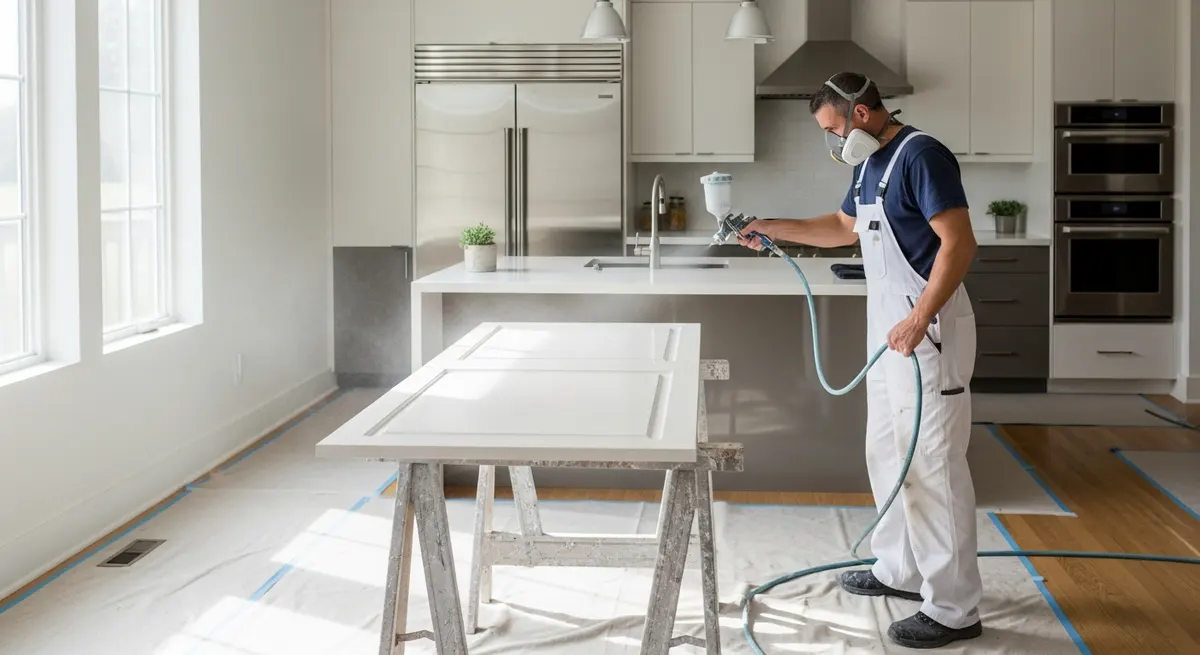
Most professionals spray the doors and drawer fronts off site or in a dedicated, dust-controlled spray area, while the boxes are masked and sprayed in place. Spraying — typically with HVLP or fine-finish airless equipment — is what produces the seamless, brush-mark-free surface that homeowners associate with new cabinetry. Solvent-based coatings require respirators and strong ventilation; the U.S. Occupational Safety and Health Administration provides guidance on workplace respiratory and chemical safety that responsible contractors follow.
Prep and Degreasing: 90% of the Result
If there is one truth in cabinet refinishing, it is that preparation determines the outcome. A flawless coating sprayed over poorly prepped cabinets will still peel; a modest coating over excellent prep will last for years. Kitchen cabinets present a unique prep challenge because they are coated in invisible cooking grease that defeats adhesion.
Degreasing comes first
Before any sanding, every surface must be thoroughly degreased. Cooking releases an airborne film of grease that settles on cabinets, especially around the stove and range hood. Paint and primer will not bond to that film no matter how aggressively you sand. Pros wash with a dedicated degreaser, often twice, and let surfaces dry completely before moving on.
Sanding and de-glossing
Once clean, surfaces are scuff-sanded to dull the existing finish and give the primer mechanical grip. The goal is not to strip the cabinets bare but to create a uniformly abraded surface. After sanding, every trace of dust is vacuumed and wiped with a tack cloth, because dust trapped under the finish shows as a gritty texture.
Filling and repairing
This is the stage to address dents, gouges, and open wood grain. If you are painting over an open-grain wood like oak, grain filler creates the smooth, modern surface most homeowners want; skipping it leaves the oak texture visible through the paint. Unwanted hardware holes — common when switching from knobs to pulls — are filled and sanded flush.
Masking and containment
Clean lines and a dust-free home come from careful masking. Countertops, backsplashes, appliances, walls, and floors are covered, and the work zone is often sealed with plastic sheeting to contain sanding dust and spray. Good containment is a hallmark of a professional operation.
Grease is the silent killer of finishes
Drying, Cure, and Reassembly
Drying and curing are two different things, and confusing them is a common source of disappointment. A coating is dry to the touch within hours, but it continues to harden — to cure — for days or weeks afterward. Treating freshly refinished cabinets gently during the cure window is essential to a finish that lasts.
Between coats
Professionals respect the recoat window printed on the product. Recoating too soon traps solvents and can cause wrinkling or poor adhesion; waiting too long with some products requires re-sanding for the next coat to bond. Light sanding between coats knocks down any raised grain or dust nibs and ensures each layer fuses to the last.
Reassembly
Once the finish has hardened enough to handle, doors and drawer fronts are reinstalled in their labeled openings, hardware is mounted, and hinges are adjusted so every door hangs straight and closes evenly. Felt bumpers are often added to door and drawer edges to keep painted surfaces from contacting each other while the finish completes its cure.
The full cure window
Even after reassembly, most cabinet coatings continue curing for two to three weeks. During this period the finish is more vulnerable to dents, fingerprints, and blocking. Avoid heavy scrubbing, taping anything to the surfaces, or slamming doors until the coating has fully hardened. Patience here pays off in a finish that resists daily wear for years.
Handle gently for the first month
Project Timeline and Living Through the Refinish
Most homeowners underestimate how a cabinet refinish actually unfolds day to day. The on-site work is short — typically 3 to 5 working days — but the doors and drawer fronts are often sprayed off site, which can stretch the overall calendar to a week or more while coatings build and cure in a controlled shop. Knowing the rhythm of the project lets you plan meals, manage the mess, and set realistic expectations for when the kitchen returns to full use.
A typical day-by-day schedule
- Day 1 — removal and masking. Doors, drawer fronts, and hardware come off and are labeled; countertops, walls, appliances, and floors are masked and the work zone is sealed.
- Day 1–2 — degrease and sand. Every surface is degreased, scuff-sanded, repaired, and tacked clean — the slowest, most important stage.
- Day 2–3 — prime and sand. A bonding primer is sprayed on boxes and doors, then sanded smooth once dry.
- Day 3–4 — finish coats. Two or more topcoats are sprayed with sanding between coats; boxes are done in place and doors in the shop or spray area.
- Day 4–5 — reassembly. Cured doors and drawers are rehung, hardware is mounted, and hinges are adjusted.
Living through it
The cabinet boxes stay in place, so your countertops, sink, and appliances remain usable for most of the project, but open shelving and coating odors can be disruptive. Expect to empty the cabinets being refinished beforehand, set up a temporary coffee-and-microwave station outside the work zone, and keep pets and children away from masked, freshly sprayed areas. Low-VOC waterborne coatings cut the odor dramatically, but ventilation still matters; crews typically run fans and seal off the rest of the home.
What can extend the timeline
- Extensive repairs — grain filling, delamination fixes, and patching hardware holes add prep days.
- Dramatic color changes — dark-to-white jobs need extra primer and coats for full coverage.
- Specialty finishes — glazing and distressing add a hand-applied stage and extra dry time.
- Humidity and temperature — damp or cold conditions slow cure and stretch recoat windows.
Plan a simple kitchen for a week
Hardware, Hinges, and Soft-Close Upgrades
Refinishing is the ideal moment to upgrade the hardware that controls how your cabinets look and feel every day. Because the doors and drawer fronts are already removed and the old hardware is off, swapping knobs, pulls, and hinges adds little labor and can completely change the character of a kitchen. New hardware is also one of the most affordable upgrades, typically running $2 to $15 per knob or pull plus installation.
Knobs and pulls
Updating pulls is the fastest way to modernize a dated kitchen. Longer bar pulls read as contemporary, while cup pulls and round knobs lean traditional. If you are switching from knobs to pulls, the old holes must be filled and sanded during prep and new holes drilled with a jig for consistent placement — a detail sloppy crews skip, leaving visible filled spots or crooked alignment.
Hinges and soft-close upgrades
Old exposed or worn hinges can be replaced with concealed European-style hinges that hide inside the cabinet and allow precise three-way adjustment for perfectly aligned doors. Soft-close hinges and drawer slides — which catch the door or drawer in the last few inches and ease it shut silently — are among the most appreciated upgrades, eliminating slamming and protecting the new finish from impact. Retrofit soft-close dampers can also be clipped onto many existing hinges for a budget option.
| Upgrade | Typical Cost Each | Benefit |
|---|---|---|
| Knobs | $2 – $10 | Quick style refresh |
| Bar / cup pulls | $3 – $15 | Modern or traditional look |
| Concealed hinges | $4 – $12 | Adjustable, hidden, aligned doors |
| Soft-close hinges | $5 – $15 | Silent, slam-free closing |
| Soft-close drawer slides | $15 – $40 / pair | Smooth, quiet drawers |
| Clip-on soft-close dampers | $2 – $6 | Budget retrofit |
Coordinating finish and function
Match the hardware finish to your overall scheme: matte black and brushed brass are current favorites, while brushed nickel and stainless remain safe, versatile choices. Mixing metals can work when done deliberately — for instance, black hinges with brass pulls — but consistency reads as more intentional in most kitchens. Order all hardware before reassembly day so the crew can install it in one pass and adjust every door in a single visit.
Buy one sample pull before committing
How Long Do Refinished Cabinets Last?
Professionally refinished cabinets typically look great for 8 to 15 years before they need a refresh, and many last longer with good care. Durability is almost entirely a function of two things: the quality of the prep and the coating used. Cabinets prepped thoroughly and finished with a catalyzed or urethane coating can rival the durability of factory cabinetry.
What shortens a finish's life
- Inadequate degreasing — the leading cause of early peeling.
- Skipping a bonding primer — finish coats lose their grip on slick or glossy surfaces.
- Wall paint instead of a cabinet coating — stays soft, blocks, and chips.
- Rushing the cure — heavy use before the finish hardens leaves marks and chips.
- Excess moisture — standing water near sinks can creep into edges over time.
What extends it
Gentle daily care, prompt cleanup of spills, good kitchen ventilation, and the occasional touch-up of high-wear edges all stretch the life of a refinish. Because the boxes do not change, future refreshes are faster and cheaper than the first project — often just a scuff-sand and a fresh topcoat years down the line.
Where wear shows up first
Even an excellent finish does not wear evenly, and knowing the hot spots lets you intervene before damage spreads. The first signs of age almost always appear at the cabinet faces flanking the dishwasher, where steam and heat cycle repeatedly; the door edges around the trash pull-out and the most-used drawers, which absorb constant fingertip contact; and the rail directly above the range, which collects aerosolized grease. The toe-kick and the lower corners near the floor take scuffs from shoes and mops. Inspecting these areas every few months and addressing a chip or worn edge promptly — with a dab of the original topcoat — can add years to the overall finish and postpone a full refresh well past the typical decade mark.
Keep leftover finish for touch-ups
DIY vs. Hiring a Pro
Cabinet refinishing is one of the most attempted — and most often regretted — DIY projects. It looks simple in online videos, but the gap between an amateur brush-and-roll job and a sprayed professional finish is enormous and immediately visible under kitchen lighting.
The case for DIY
A patient, detail-oriented homeowner can refinish cabinets for the cost of materials, typically a few hundred dollars in primer, paint, and supplies. For a low-use kitchen, a rental, or a budget refresh you can live with, a careful brush-and-roll job with a quality cabinet enamel can look acceptable. The savings are real if your time is free and your expectations are modest.
The case for hiring a pro
A professional brings spray equipment, a dust-controlled environment, catalyzed coatings you cannot easily buy or safely apply yourself, and the experience to degrease, prime, and finish so the result lasts. The finish is smoother, the coating is more durable, and the project is done in days rather than the weeks a careful DIY job consumes. Spraying solvent coatings also involves real respiratory and fire hazards that professionals are equipped to manage.
| Factor | DIY | Professional |
|---|---|---|
| Typical cost | $200 – $600 materials | $2,000 – $7,000 |
| Finish quality | Brush/roller texture likely | Sprayed, factory-smooth |
| Durability | Varies, often lower | 8 – 15 years |
| Time | 1 – 3 weeks of evenings | 3 – 5 days |
| Coatings available | Off-the-shelf enamels | Catalyzed / urethane |
| Best for | Budget refresh, rentals | Long-lasting, high-use kitchens |
Prepare a clear scope using our quote comparison checklist. Confirm service area, credentials and availability directly with any contractor. Directory listings are being restored.
How to Hire a Cabinet Refinishing Pro
Cabinet refinishing is a specialty within painting, and not every general painter does it well. The smooth, durable result you want depends on hiring a contractor with the right equipment, products, and track record. Use these steps to vet candidates and protect yourself.
Verify licensing and insurance
Confirm the contractor is licensed where required and carries liability insurance and workers' compensation. A spray operation inside your home carries real risk, and proper insurance protects you if something is damaged or someone is injured. Reputable pros provide proof without hesitation.
Ask the right questions
- What specific primer and topcoat will you use on my cabinets, and why?
- Do you spray the doors, and where — on site or in a shop?
- How do you handle degreasing and grain filling?
- How long is the cure, and when can I use the kitchen normally?
- Do you offer a written warranty on adhesion and finish?
- Can I see photos or visit a recent refinishing project?
Review portfolios and references
Prepare a clear scope using our quote comparison checklist. Confirm service area, credentials and availability directly with any contractor. Directory listings are being restored.
Get a detailed written estimate
A professional estimate spells out the door and drawer count, the coating system, the number of coats, repairs included, the color and sheen, the timeline, and the warranty. Vague one-line quotes are a red flag. A clear scope protects both you and the contractor and makes it easy to compare bids fairly.
Understand the payment schedule and contract terms
Prepare a clear scope using our quote comparison checklist. Confirm service area, credentials and availability directly with any contractor. Directory listings are being restored.
Get the warranty in writing
Common Mistakes to Avoid
Most cabinet refinishing failures trace back to a handful of avoidable mistakes. Knowing them helps you spot a careless contractor and, if you do attempt a DIY job, avoid the pitfalls that ruin a finish.
- Skipping degreasing. Painting over invisible cooking grease is the number one cause of peeling. Surfaces must be thoroughly degreased before anything else.
- No bonding primer. On glossy, laminate, or thermofoil surfaces, finish coats need a high-adhesion primer to grip. Skipping it guarantees chipping.
- Using wall paint. Ordinary latex wall paint stays soft, blocks, and scuffs on cabinets. A cured cabinet coating is essential.
- Brushing and rolling everything. Brush marks and roller stipple stand out on flat cabinet faces. Spraying is what produces a factory look.
- Not filling the grain. Painting open-grain oak without grain filler leaves a textured surface that looks unfinished.
- Rushing the cure. Loading cabinets and slamming doors before the finish hardens leaves dents and marks that never fully recover.
- Poor dust control. Sanding dust settling on wet coats creates a gritty surface. Containment and tack-off matter.
- Mislabeling doors. Failing to label parts during removal leads to misaligned doors that never hang quite right on reassembly.
Inspect under raking light
Maintenance and Care
Refinished cabinets are easy to maintain, and a little routine care keeps them looking new for years. The same surfaces that take daily abuse reward gentle, consistent attention.
Daily and weekly care
Wipe spills, splatters, and fingerprints promptly with a soft, damp cloth and a mild dish soap solution. Avoid abrasive scrubbers, scouring powders, and harsh chemical cleaners, which can dull or scratch the finish over time. Dry the surface after cleaning so water does not sit on edges and seams.
Protecting high-wear areas
The cabinets around the sink, dishwasher, and stove take the most abuse from water, steam, and grease. Keep these areas dry, run the range hood while cooking to reduce grease buildup, and consider clear protective bumpers on edges that rub. Good kitchen ventilation, the same factor that protects interior paint and air quality, also extends the life of your cabinet finish.
Touch-ups over time
Even durable finishes pick up the occasional chip or scuff after years of use. A small amount of the original topcoat, applied to a clean, lightly sanded spot, blends in easily and prevents minor damage from spreading. Addressing chips early keeps the finish intact and delays the need for a full refresh.
One of the great advantages of refinishing over replacement becomes clear years later: because the cabinet boxes never changed, future refreshes are dramatically faster and cheaper than the first project. When styles shift again or the finish finally shows its age, a contractor can scuff-sand the existing coating and spray a fresh topcoat in a fraction of the time, since the heavy degreasing, repairing, and priming work has already been done. In practice this means a kitchen you refinish today can be economically updated to a new color a decade from now without ever touching the cabinetry itself, making refinishing a genuinely sustainable, long-term approach to keeping your kitchen current.
Ventilation is your finish's best friend
Frequently Asked Questions
Related Painting Guides
Deck & Fence Staining
Stain vs. seal, prep, product choice, and timing to protect wood for years.
Wallpaper & Drywall
Wallpaper removal and drywall repair done right so your new paint lays flawless.
Epoxy Flooring
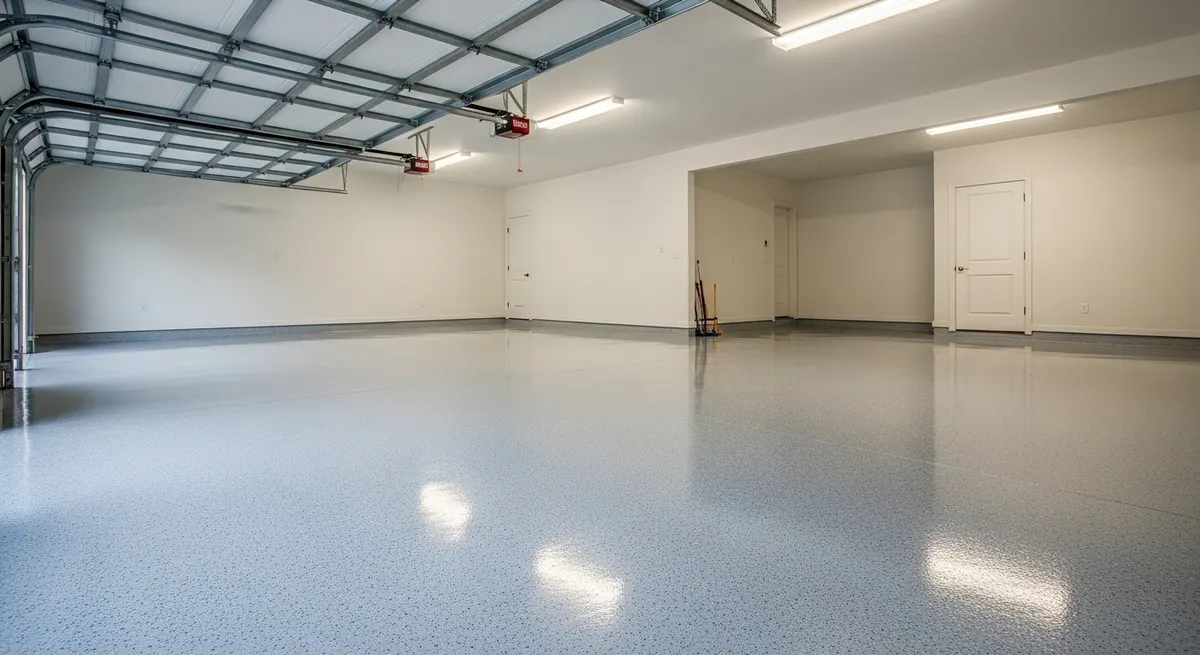
Durable, beautiful epoxy floor coatings for garages and shops — systems, cost, and longevity.
Pressure Washing
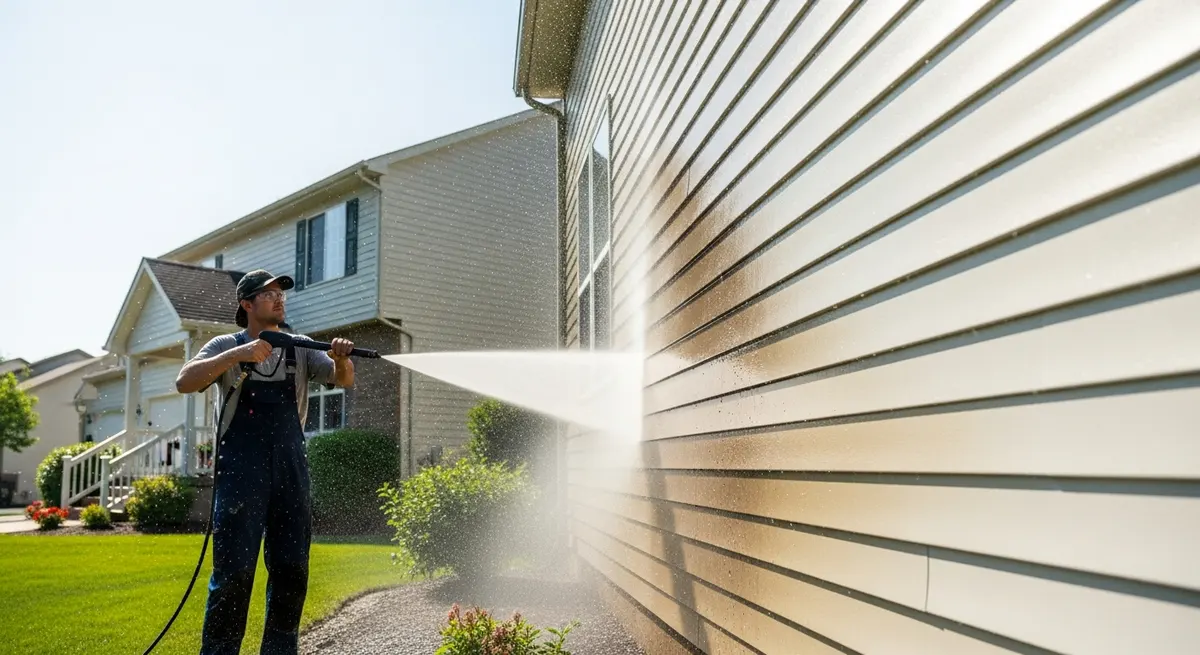
Restore siding, decks, and driveways — when to wash, soft-wash vs. pressure, and what it costs.
Prepare your project brief
Build a clear scope to discuss with a contractor. Directory listings are being restored; this does not confirm local availability.