
Quick Answer
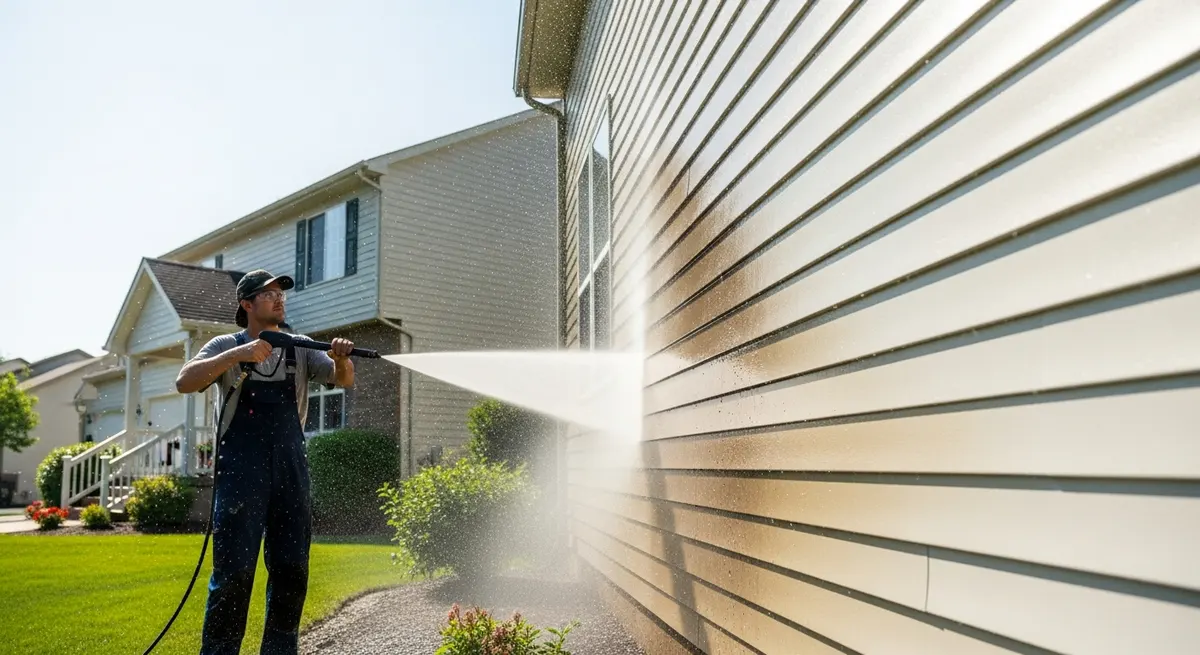
Pressure washing uses high-pressure water, typically 1,500 to 4,000 PSI, to remove dirt, mold, algae, and grime from exterior surfaces. Professional service usually costs $0.15 to $0.75 per square foot, or about $200 to $600 for an average home. Delicate surfaces like siding and roofs should be soft washed at low pressure instead.
Key Takeaways
- Pressure washing costs roughly $0.15-$0.75 per square foot; a typical home exterior runs $250-$500.
- High pressure (1,500-4,000 PSI) suits concrete and brick; soft washing under 500 PSI is correct for siding, stucco, wood, and roofs.
- Washing is essential prep before exterior painting; paint will not bond to dirty, chalky, or mildewed surfaces.
- The wrong nozzle or too little distance can gouge wood, etch concrete, and force water behind siding.
- Soft washing with biocidal detergents kills mold and algae at the root so surfaces stay clean far longer than rinsing alone.
What Is Pressure Washing?
Pressure washing is the use of pressurized water to remove dirt, mold, mildew, algae, moss, grease, loose paint, and other contaminants from exterior surfaces. A pressure washer pump accelerates ordinary water through a narrow nozzle, multiplying its cleaning force many times over what a garden hose can deliver. The result is a fast, deep clean that restores siding, concrete, brick, decks, fences, and driveways to a condition close to new — often dramatically so.
The term covers a spectrum of techniques rather than a single method. At the high end, true pressure washing blasts grime off hard, durable surfaces using thousands of pounds of force per square inch. At the gentle end, soft washing relies on low pressure and chemistry to clean fragile materials safely. Knowing which method a surface needs is the difference between a flawless result and an expensive repair, and it is the single most important concept in this guide.
Prepare a clear scope using our quote comparison checklist. Confirm service area, credentials and availability directly with any contractor. Directory listings are being restored.
What pressure washing typically cleans
- Siding and exterior walls — vinyl, fiber cement, stucco, brick, and wood, usually via soft washing.
- Concrete and masonry — driveways, walkways, patios, steps, and retaining walls.
- Decks and fences — wood and composite surfaces, often as prep before staining.
- Roofs and gutters — shingles and tile streaked with algae, always cleaned with low-pressure soft washing.
- Outdoor living features — pool decks, outdoor kitchens, retaining walls, and hardscape.
Pressure Washing vs. Soft Washing
The most consequential decision in any exterior cleaning job is whether to use high pressure or soft washing. They are not interchangeable, and using the wrong one is the leading cause of property damage. The right choice depends entirely on the surface and the type of soiling.
How pressure washing works
Pressure washing relies on mechanical force. Water exits the nozzle at high velocity and physically dislodges dirt and buildup. It excels on hard, non-porous, and durable surfaces — concrete, pavers, brick, and stone — where the buildup is stubborn and the material can withstand the impact. On these surfaces, high pressure is fast and effective, stripping years of grime, tire marks, and embedded dirt.
How soft washing works
Soft washing uses low pressure, generally under 500 PSI, paired with specialized cleaning solutions. Instead of blasting growth off the surface, the detergents kill mold, algae, mildew, and bacteria at the root, then a gentle rinse carries everything away. Because it depends on chemistry rather than force, soft washing is safe for delicate and porous materials and keeps surfaces cleaner for far longer, since the organisms are destroyed rather than merely knocked loose.
When to use each
| Surface | Recommended Method | Why |
|---|---|---|
| Concrete driveway | Pressure washing | Durable, handles high PSI and stubborn stains |
| Brick & stone | Pressure (moderate) | Strong but mortar can erode at high PSI |
| Vinyl siding | Soft washing | Cracks and lets water behind panels under pressure |
| Stucco & EIFS | Soft washing | Porous and easily etched or chipped |
| Wood deck/fence | Low pressure / soft | Fibers splinter and gouge under high PSI |
| Roof shingles | Soft washing only | High pressure strips granules and voids warranties |
| Painted surfaces | Soft washing | Pressure strips and chips intact paint |
When in doubt, soft wash
Benefits and Why Pressure Washing Matters
Pressure washing is one of the highest-impact, lowest-cost improvements available to a property owner. A single afternoon of cleaning can transform a tired, grimy exterior into one that looks freshly maintained, and the benefits go well beyond appearance.
Curb appeal and property value
A clean exterior reads as a well-maintained home. Real estate agents routinely recommend washing siding, driveways, and walkways before listing because clean surfaces photograph better and create a strong first impression. Green and black streaks of algae, gray weathered wood, and oil-stained concrete all signal neglect to buyers, while a bright, clean facade signals a home that has been cared for.
Protecting your investment
The organic growth that pressure washing removes is not just unsightly — it is actively destructive. Algae and mold hold moisture against siding and roofing, accelerating rot and decay. Mildew degrades paint. Dirt and pollen trap grime that wears down finishes. Removing these contaminants annually extends the service life of paint, wood, roofing, and masonry, deferring far more expensive repairs and replacements.
Health and safety
Mold and mildew on exterior surfaces can aggravate allergies and respiratory issues, and algae-slick walkways, decks, and pool surrounds are a genuine slip hazard. Regular cleaning reduces both risks, keeping outdoor surfaces safer for family and visitors.
Lower long-term maintenance cost
There is a financial case for routine washing that is easy to overlook. A standard annual wash of a home exterior runs roughly $250 to $500, while the repairs that neglected growth eventually forces — replacing rotted trim, re-shingling a moss-covered roof, or repainting siding that peeled because mildew was never removed — run into the thousands. Algae can shorten an asphalt roof's service life by several years, and trapped moisture is a leading cause of premature wood decay. Spending a few hundred dollars a year to prevent organic growth is one of the cheapest forms of insurance a homeowner can buy, deferring repaint cycles and postponing major replacements that cost ten to twenty times as much.
Essential preparation before painting
Perhaps the most important benefit for homeowners planning a repaint: washing is mandatory prep. Paint and stain cannot bond to a surface coated with dirt, chalk, mildew, or loose old paint. A proper wash is the first step of any quality exterior painting project and a major reason professional paint jobs last so much longer than rushed ones. The same logic applies before refinishing a deck — a thorough cleaning is the foundation of good deck and fence staining.
Wash before you paint, every time
How Much Does Pressure Washing Cost?
Professional pressure washing is most often priced by the square foot, by the surface or project, or by the hour. In the United States, expect roughly $0.15 to $0.75 per square foot, with a typical single-story home exterior landing between $250 and $500. Many contractors quote flat rates by project, which makes budgeting straightforward. The wide range reflects how much surface, height, and buildup vary from job to job.
| Project | Typical Cost Range | Notes |
|---|---|---|
| Driveway (2-car) | $100 - $250 | Concrete; oil stains add cost |
| Sidewalk / walkway | $50 - $150 | Priced by length and width |
| House exterior (1-story) | $250 - $450 | Usually soft washed |
| House exterior (2-story) | $400 - $700 | Height and ladder work add cost |
| Deck or patio | $150 - $350 | Often pre-stain prep |
| Fence (per linear foot) | $1 - $3 | Both sides; wood vs. vinyl |
| Roof (soft wash) | $400 - $900 | Specialized low-pressure work |
| Whole-property package | $400 - $1,200 | House, drive, walks bundled |
What drives the price up or down
- Square footage — more area to clean means more time, water, and detergent.
- Height and access — second stories, steep grades, and tight spaces require ladders or lifts and slow the work.
- Level of buildup — heavy mold, thick algae, oil stains, and rust take extra dwell time and passes.
- Surface type — delicate surfaces requiring soft washing and special chemistry can cost more than blasting concrete.
- Detergents and treatments — biocidal and degreasing solutions, sealers, and rust removers add to materials cost.
- Runoff containment — jobs requiring water capture or filtration for compliance add labor and equipment.
- Regional labor rates — pricing in major metros can run noticeably higher than in smaller markets.
Bundling services usually lowers the per-item price. Washing the house, driveway, and walkways in one visit is far more economical than booking them separately, since the crew sets up once. If a repaint is on the horizon, compare the cost of standalone washing against a package that includes prep, and review typical project pricing before you commit.
How contractors structure their pricing
Most pressure washing companies build a quote from three components: a minimum service charge, a per-square-foot or per-surface rate, and add-ons for difficulty. The minimum — commonly $150 to $250 — covers the cost of loading equipment, driving to the site, and setting up, which is why a tiny standalone job rarely costs proportionally less than a medium one. Per-square-foot rates then scale with the area cleaned, and add-ons such as oil-stain removal, rust treatment, gutter brightening, sealing, or runoff containment are itemized on top. Understanding this structure explains why bundling pays off: you absorb the fixed minimum and trip charge once across several surfaces instead of paying it repeatedly. When you compare bids, make sure each one breaks out these components so you are comparing the same scope rather than just a headline number.
Beware suspiciously low bids
Surfaces and the Right Approach for Each
No two materials clean the same way. Matching technique, pressure, and chemistry to the surface is the core skill of professional exterior cleaning. Here is how the most common surfaces should be approached.
Vinyl siding
Vinyl is best soft washed. A mold-killing detergent applied at low pressure cleans thoroughly without cracking brittle older panels or driving water up behind the laps into the wall cavity. Always spray at a downward angle. While vinyl can technically tolerate up to roughly 1,300 to 1,600 PSI, the soft-wash approach is safer and keeps it cleaner longer.
Wood (decks, fences, siding)
Wood is soft and easily damaged. Use low pressure with a wide fan tip and keep the wand moving to avoid gouging, furring, or splintering the grain. A dedicated wood cleaner and, where needed, a brightener restore color and open the grain for stain. Excess pressure raises the fibers and ruins the surface for finishing — a common, costly DIY error.
Brick and masonry
Brick is durable but the mortar between bricks is not. Moderate pressure works, but too much erodes mortar joints and can drive water into the wall. Older or historic brick is especially vulnerable and often calls for gentle chemical cleaning. Test an inconspicuous area first.
Stucco and EIFS
Stucco is porous and prone to chipping and etching, so it should be soft washed almost exclusively. Hairline cracks let pressurized water into the wall assembly, where it causes hidden damage and mold. Low pressure plus the right detergent is the safe path.
Concrete
Driveways, walkways, and patios are the ideal candidates for true pressure washing. Concrete tolerates high PSI and benefits from a surface cleaner attachment, which delivers an even, streak-free result. Oil and rust stains usually need a targeted degreaser or rust remover in addition to pressure.
Roofs
Roofs should never be high-pressure washed. The black streaks on shingles are algae, and high pressure strips protective granules, shortens roof life, and voids most manufacturer warranties. Soft washing with an approved solution is the only correct method, and it is best left to insured professionals comfortable working at height.
Composite and fiber cement
Composite decking and fiber cement siding are durable but still benefit from a gentle approach. Both clean well with low to moderate pressure and a mild detergent, which lifts the surface film of dirt and mildew without risking the manufacturer finish. Avoid concentrated high-pressure streams on composite boards, which can fuzz or mar the cap layer, and follow the manufacturer cleaning guidelines, since aggressive chemicals or pressure can void product warranties on these engineered materials.
Outdoor hardscape and pavers
Interlocking pavers, flagstone, and stamped concrete clean beautifully with moderate pressure, but the joint sand between pavers washes out easily under a narrow tip held too close. Use a wider fan, keep the wand moving, and plan to replace polymeric joint sand and reseal afterward. Stamped and decorative concrete should be cleaned gently to preserve its color coat and sealer rather than stripping it away.
Cleaning Driveways, Gutters, and Roofs
Three of the most-requested cleaning jobs each have their own quirks. Driveways take the highest pressure of anything on the property, gutters demand a mix of mechanical and hand work, and roofs are the single most dangerous surface to get wrong. Treating them as one generic task is how homeowners end up with stripes, streaks, and stripped shingles.
Driveways and concrete flatwork
Concrete driveways are durable enough for true pressure washing at 2,500 to 4,000 PSI, but the secret to a uniform result is a rotating surface cleaner — a flat, shrouded attachment that spins two nozzles across the slab at a fixed height. It cleans roughly four to ten times faster than a single wand and eliminates the "zebra striping" that a handheld tip leaves behind. Pre-treat oil with a dedicated degreaser and rust with an oxalic or specialty remover, letting each dwell 5 to 10 minutes before rinsing. Expect a two-car driveway of 400 to 600 square feet to take 45 to 90 minutes, and plan to seal porous or newly poured concrete after it dries to slow future staining.
Gutters and fascia
Gutter cleaning has two parts: clearing the inside of leaves and debris so water flows, and removing the gray-black "tiger stripes" of oxidized aluminum and grime on the outside face. The streaks are a baked-on film that pressure alone will not lift, so a gutter-brightening detergent is applied, allowed to dwell, then agitated with a soft brush and rinsed at low pressure. Never blast gutters at high PSI from below — it dents thin aluminum, loosens hangers, and forces water up under the roof edge.
Roofs (soft wash only)
The black streaks on asphalt shingles are Gloeocapsa magma, a hardy algae, and the only correct treatment is a low-pressure soft wash with a sodium-hypochlorite solution that kills it at the root. High pressure strips the protective granules that give shingles their UV and weather resistance, shortening roof life and voiding most manufacturer warranties. Asphalt shingle manufacturers, through the Asphalt Roofing Manufacturers Association, specifically endorse low-pressure chemical cleaning over power washing. Because roof work combines slick surfaces, height, and chemicals, it is the clearest case for hiring an insured pro rather than attempting it yourself.
- Driveway: surface cleaner at 2,500-4,000 PSI; degrease oil first.
- Gutters: hand-clear debris, then brighten and brush the exterior at low pressure.
- Roof: soft wash under 100 PSI with biocide; never pressure wash shingles.
PSI, GPM, and the Nozzle Guide
Two specifications define a pressure washer's capability: PSI and GPM. Understanding them — and the color-coded nozzle system — is essential to cleaning effectively without causing damage.
PSI vs. GPM
PSI (pounds per square inch) measures the force of the water — its ability to dislodge stubborn buildup. GPM (gallons per minute) measures the volume of water — its ability to flush debris away and rinse quickly. The two multiply to determine real cleaning power; a high-PSI, low-GPM machine cleans slowly, while balanced PSI and GPM clean efficiently. Professional machines typically deliver more GPM than consumer units, which is why pros finish faster.
| Nozzle (Degree) | Spray Pattern | Typical Use |
|---|---|---|
| 0 (red) | Pinpoint jet | Rarely used; can damage most surfaces |
| 15 (yellow) | Narrow fan | Stripping paint, heavy stains on concrete |
| 25 (green) | Medium fan | General concrete, driveways, patios |
| 40 (white) | Wide fan | Siding, wood, vehicles, gentle cleaning |
| 65 (black) | Soaping / low pressure | Applying detergent, soft washing |
Typical pressure ranges by surface
- Soft washing (siding, roofs, stucco, wood): under 500 PSI with detergent.
- Vinyl siding (if pressure used): 1,300 to 1,600 PSI, wide tip, downward angle.
- Wood decks and fences: 500 to 1,200 PSI with a wide fan, wand kept moving.
- Brick and masonry: 1,500 to 2,500 PSI, testing first.
- Concrete and driveways: 2,500 to 4,000 PSI, often with a surface cleaner.
Distance matters as much as PSI
Equipment: Electric vs. Gas, Hot vs. Cold Water
The machine matters as much as the operator. The two biggest equipment decisions are the power source — electric or gas — and whether the unit heats its water. Each pairing suits a different scale of work, and knowing the trade-offs helps you judge whether a contractor is bringing the right tool or a homeowner-grade unit to a professional job.
Electric vs. gas power
Electric pressure washers are quiet, lightweight, emission-free, and maintenance-light, but they typically top out around 1,300 to 2,000 PSI and 1.2 to 1.5 GPM — fine for cars, patio furniture, small decks, and light siding. Gas units run 2,500 to 4,200 PSI at 2.5 to 4 GPM, delivering the volume and force needed for driveways, large homes, and commercial flatwork. The higher GPM is what makes gas machines finish big jobs in a fraction of the time, which is why nearly every professional crew runs gas or even diesel-powered equipment.
Hot vs. cold water
Most consumer machines use cold water. Hot-water pressure washers heat output to roughly 140 to 200 degrees Fahrenheit, and that heat dramatically improves results on grease, oil, gum, and grime — the same reason hot water cuts kitchen grease better than cold. Hot-water units cost far more and are heavier, so they are mainly used in commercial, fleet, and industrial cleaning where oily contamination is common.
| Machine Type | Typical PSI / GPM | Best For |
|---|---|---|
| Electric (consumer) | 1,300-2,000 / 1.2-1.5 | Cars, furniture, small decks |
| Gas (residential) | 2,500-3,200 / 2.5-3.0 | Driveways, siding, fences |
| Gas (professional) | 3,300-4,200 / 3.5-4.0 | Whole homes, large flatwork |
| Hot-water (commercial) | 3,000-4,000 / 4.0+ | Grease, oil, fleet, industrial |
| Soft-wash system | Under 500 / high volume | Roofs, siding, stucco |
Attachments that change the result
- Surface cleaner: a spinning disc for streak-free, fast cleaning of driveways and patios.
- Telescoping wand: reaches second-story siding and soffits from the ground, reducing ladder risk.
- Downstream injector: draws detergent into the stream for soft washing at low pressure.
- Turbo / rotary nozzle: combines a zero-degree jet with a rotating pattern for stubborn concrete stains.
GPM is the speed dial, PSI is the power dial
The Professional Pressure Washing Process
A quality contractor follows a disciplined, repeatable sequence. Knowing these steps helps you judge whether a crew is cleaning properly or simply blasting water and hoping for the best. These steps mirror the process a professional follows from arrival to final inspection.
- Inspect and plan. The pro walks the property, identifies each surface type and the level of buildup, notes fragile areas, and decides where to pressure wash and where to soft wash.
- Protect the area. Outdoor furniture is moved, plants and shrubs are wetted and covered, electrical outlets and fixtures are shielded, and windows and doors are closed.
- Pre-treat with detergent. A surface-appropriate cleaning solution is applied and allowed to dwell so it can break down mold, algae, grease, and embedded grime before rinsing.
- Select pressure and nozzle. The crew matches PSI, GPM, and nozzle tip to the surface, starting with lower pressure and a wider fan to avoid damage.
- Test a small area. An inconspicuous spot is washed first to confirm the pressure and distance clean effectively without etching or marking the surface.
- Wash systematically. Surfaces are cleaned from top to bottom in overlapping passes, with the wand kept moving and held at a consistent distance for an even, streak-free result.
- Rinse thoroughly. All detergent and loosened debris is rinsed from the top down, including surrounding plants and hardscape, before the solution can dry and leave residue.
- Inspect and let dry. The crew checks for missed spots and streaks, does touch-up passes, and allows surfaces to dry fully before any staining, painting, or sealing.
The discipline of working top to bottom, controlling distance, and letting detergents do the heavy lifting is what separates a professional result from a streaky, damaged one. It is also why pros can clean a large two-story home safely in a few hours.
Detergents, Eco-Friendly Cleaning, and Runoff
Water alone removes loose dirt, but the cleaning power that makes exteriors stay clean comes from chemistry. The right detergent kills organic growth, lifts grease, and brightens dull surfaces — but those same chemicals carry environmental responsibilities.
Common cleaning solutions
- Sodium hypochlorite (bleach-based): the workhorse of soft washing, it kills mold, mildew, and algae at the root for long-lasting results.
- Surfactants: added to help solutions cling to surfaces, penetrate buildup, and rinse clean.
- Degreasers: formulated to break down oil, grease, and automotive stains on concrete.
- Specialty removers: targeted products for rust, tannin stains, efflorescence, and graffiti.
- Wood cleaners and brighteners: restore weathered wood and prepare it to accept stain.
Eco-friendly considerations
Biodegradable and plant-based detergents clean effectively while reducing harm to lawns, gardens, and waterways. Responsible pros wet surrounding vegetation before and after application to dilute any overspray, choose the gentlest effective product, and avoid applying chemicals on windy days that scatter solution where it should not go.
Wash water runoff and regulations
Wash water can carry detergents, oil, paint chips, sediment, and biocides into storm drains, which typically flow untreated directly to rivers, lakes, and the ocean. The U.S. Environmental Protection Agency regulates this discharge under its National Pollutant Discharge Elimination System (NPDES) stormwater program, and many municipalities require that wash water be contained, filtered, or diverted away from storm drains — especially on commercial jobs. Reputable contractors use biodegradable cleaners, capture or redirect runoff where required, and never wash pollutants directly into the storm sewer. You can learn more about protecting local waterways through the EPA's nonpoint source pollution resources.
Runoff is a real liability
Safety and Common Damage Risks
A pressure washer is a powerful tool that deserves respect. The same force that strips grime can injure people and damage property in an instant. Both personal safety and surface safety matter.
Personal safety
The water stream from a pressure washer can cut skin and cause serious lacerations — a zero-degree tip at close range is genuinely dangerous. Wear eye protection, closed-toe shoes, and gloves; never point the wand at people or pets; and be cautious of kickback when triggering the gun. Electric shock is a risk near outlets and fixtures, and ladder work while managing a recoiling wand causes many falls. The U.S. Consumer Product Safety Commission publishes pressure washer safety guidance worth reviewing before any DIY job, and worksite practices are addressed by OSHA.
Surface damage risks
- Gouged and splintered wood from too much pressure or holding the tip too close.
- Etched or pitted concrete caused by a narrow tip lingering in one spot.
- Cracked stucco and chipped brick mortar from excessive force on porous masonry.
- Water intrusion behind siding when spray is angled upward under the laps, leading to mold and rot.
- Stripped paint and granule loss on painted surfaces and roof shingles.
- Broken windows and seals, shredded screens, and damaged light fixtures from direct high-pressure contact.
Protecting the surroundings
Before washing, cover or relocate plants, furniture, grills, and decor; shield electrical outlets and fixtures; close all windows and doors; and keep people and pets clear of the work zone. A little setup prevents most of the collateral damage that turns a cleaning job into a repair bill.
How Often Should You Pressure Wash?
The right frequency depends on climate, surroundings, and surface, but a simple rule covers most homes: wash the exterior once a year. Properties in humid, shaded, or heavily wooded settings — where mold and algae thrive — often benefit from twice-yearly cleaning, while homes in dry, sunny climates may go longer between washes.
| Surface | Recommended Frequency | Notes |
|---|---|---|
| House siding | Once a year | Twice in humid or shaded areas |
| Driveway & walkways | Once a year | More often with heavy traffic or oil |
| Deck | Every 1-2 years | Before each re-stain cycle |
| Fence | Every 1-2 years | Wood needs more frequent care |
| Roof | As needed | When algae streaking appears |
| Before painting | Every time | Mandatory prep for adhesion |
Signs it is time to wash
- Green, black, or red streaks of algae and mold on siding or roof.
- A dull, chalky film when you wipe a hand across the wall.
- Slippery, slick patches on decks, steps, or walkways.
- Oil and rust stains spreading on the driveway.
- Visible dirt and cobweb buildup in corners and under eaves.
- You are planning to repaint or re-stain any exterior surface.
Staying on a regular schedule is far easier and cheaper than tackling years of accumulated buildup, which requires stronger chemicals, more passes, and sometimes still leaves permanent staining. Think of washing as routine maintenance, not a rescue operation.
How climate and surroundings change the schedule
The once-a-year baseline shifts with local conditions. Homes in the humid Southeast, the Pacific Northwest, and the Gulf Coast battle algae and mildew year-round and often need two washes annually. Heavy tree cover is a major factor: shaded, north-facing walls stay damp longer and grow algae faster than sun-exposed ones, so the same house can need its shaded side cleaned twice as often as its sunny side. Coastal properties accumulate salt spray that should be rinsed periodically, and homes near farm fields, gravel roads, or busy highways collect dust and exhaust film that build up quickly. The best approach is to inspect twice a year — typically in spring after pollen season and again in fall — and wash whatever has visibly grown or soiled rather than rigidly following a fixed calendar date.
Pressure Washing as Prep Before Painting or Staining
For homeowners planning an exterior refresh, washing is not an optional extra — it is the first and most important step of the job. Paint and stain are adhesives; they can only grip a surface that is clean, sound, and dry. A wash removes the dirt, chalk, mildew, pollen, and loose flaking paint that otherwise sit between the old surface and the new coating, causing it to peel, blister, and fail years early. Skipping or rushing this step is one of the most common reasons a paint job that should last a decade fails within two or three seasons.
What washing removes before paint
- Chalk — the powdery residue of degraded old paint that prevents new paint from bonding.
- Mildew and algae — living growth that keeps spreading beneath fresh paint if not killed at the root.
- Dirt and pollen — a film that blocks adhesion and shows through thin coats.
- Loose and peeling paint — flakes that the new coat cannot anchor to.
- Salt and pollutants — coastal and urban deposits that interfere with curing.
Pressure level for pre-paint washing
The goal is to clean without driving water into the wall assembly, so siding is almost always soft washed or washed at low pressure with a mildewcide. Aggressive pressure can force moisture behind laps and trim, where it later pushes the new paint off from the inside. After washing, surfaces must dry fully — typically 24 to 48 hours for siding and up to 72 hours for dense wood or in humid weather — before primer or paint is applied. Painting over damp material traps moisture and guarantees peeling.
Coordinating wash, dry, and finish
Prepare a clear scope using our quote comparison checklist. Confirm service area, credentials and availability directly with any contractor. Directory listings are being restored.
Never paint a wet or dirty surface
DIY vs. Hiring a Professional
Pressure washing sits in an appealing middle ground: the equipment is rentable and the basic idea is simple, which tempts many homeowners to DIY. For the right tasks that is reasonable, but the wrong tasks can lead to injury or expensive damage. Here is how to decide.
Reasonable DIY projects
- Small concrete patios, walkways, and steps.
- A single-level fence or a modest wood deck at low pressure.
- Outdoor furniture, trash bins, and garden tools.
- Light, accessible siding cleaning on a single-story home.
Best left to professionals
- Two-story homes and any work requiring ladders or lifts.
- Roofs and any surface needing soft washing chemistry.
- Delicate stucco, EIFS, historic brick, and painted surfaces.
- Oil, rust, and stubborn stains needing specialized treatment.
- Full pre-paint preparation where adhesion is on the line.
The real cost of DIY
Prepare a clear scope using our quote comparison checklist. Confirm service area, credentials and availability directly with any contractor. Directory listings are being restored.
Rent the right machine if you DIY
How to Hire a Pressure Washing Professional
The quality and safety of a pressure washing job depend almost entirely on the person holding the wand. A skilled, insured pro protects your property; an unqualified one can damage it. Use these criteria to choose well.
Verify licensing and insurance
Confirm the contractor carries liability insurance to cover any accidental damage to your home, and workers' compensation if they have employees. This is non-negotiable: without it, you could be financially exposed if water damages your siding or a worker is injured on your property. Ask for a certificate of insurance, not just a verbal assurance.
Ask about method and experience
A knowledgeable pro will talk about soft washing versus pressure washing and explain which they will use on each surface. If a contractor proposes blasting your roof or stucco with high pressure, that is a red flag. Ask how long they have worked with your specific surfaces and request photos of comparable past jobs.
Get a detailed written estimate
A trustworthy estimate lists each surface, the method and detergents to be used, what is included, and the total price. Beware quotes that are vague or far below the rest. Compare at least two or three bids on scope, not just bottom-line price.
Check reviews and references
Read recent reviews and ask for references from jobs similar to yours. Look specifically for comments about care taken around plants, windows, and delicate surfaces, and whether the crew cleaned up afterward. A pattern of damage complaints is a clear warning.
Confirm runoff and safety practices
Prepare a clear scope using our quote comparison checklist. Confirm service area, credentials and availability directly with any contractor. Directory listings are being restored.
Red flags to avoid
Common Pressure Washing Mistakes
Most pressure washing failures trace back to a handful of avoidable errors. Recognizing them helps you evaluate a contractor and avoid trouble if you DIY.
Using too much pressure
The most frequent and damaging mistake. High pressure feels productive but gouges wood, etches concrete, cracks stucco, and strips paint. More force is not better; the right detergent and technique do the real work.
Choosing the wrong nozzle
A zero- or fifteen-degree tip concentrates enormous force in a tiny area and can wreck a surface in seconds. Most cleaning should use wider tips (25 to 40 degrees) and a soaping tip for detergent.
Spraying siding from below
Angling the spray upward drives water behind siding and up under laps, where it becomes trapped and breeds mold and rot. Always wash siding at a downward angle.
Skipping detergent
Rinsing with water alone removes loose dirt but leaves mold and algae roots behind, so growth returns within months. Proper chemistry is what makes a clean last.
Pressure washing the roof
High pressure strips shingle granules, shortens roof life, and voids warranties. Roofs must be soft washed only.
Not protecting the surroundings
Failing to cover plants, shield outlets, and close windows leads to dead landscaping, electrical hazards, and water intrusion. A few minutes of setup prevents most collateral damage.
Letting detergent dry on the surface
Cleaning solutions left to dry in the sun can streak and discolor surfaces. Work in manageable sections and rinse before the solution dries.
Maintenance and Aftercare
Pressure washing is most valuable as part of an ongoing maintenance routine rather than a one-time rescue. A few habits keep your exterior looking its best and stretch the time between washes.
Seal and protect cleaned surfaces
After concrete dries fully, a penetrating sealer helps repel oil, water, and stains and makes future cleaning easier. Newly cleaned wood decks and fences should be re-stained or sealed once dry to lock in the refreshed look and protect against moisture — the natural next step after a wash and a core part of deck and fence staining.
Address growth early
Spot-treat new patches of algae or mildew as they appear rather than waiting for a full-property buildup. Keeping gutters clear, trimming back overhanging branches, and improving drainage reduces the moisture that feeds organic growth in the first place.
Stay on a schedule
Mark a recurring annual reminder to wash siding and hard surfaces, and inspect after storms or pollen season. Regular, lighter cleanings are faster, gentler on surfaces, and cheaper than periodic heavy restorations.
Coordinate with painting
If a repaint is coming, time your wash as the first step of the project so surfaces are clean and fully dry before primer and paint go on. The same principle applies indoors for prep-heavy work like interior painting, where surface cleanliness drives adhesion. A clean, well-maintained exterior is the foundation for a paint job that lasts.
Wash, dry, then finish
Frequently Asked Questions
Related Painting Guides
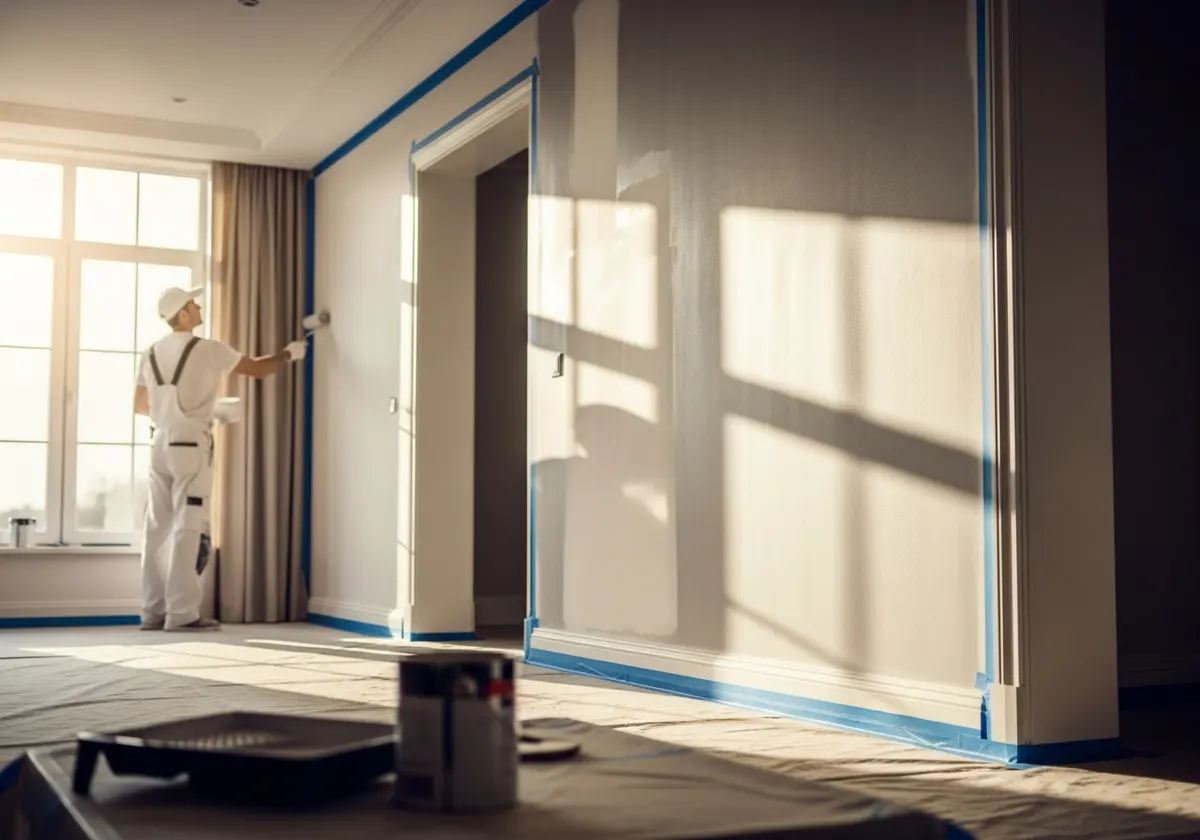
Interior Painting
Walls, ceilings, trim, and accent work — costs, finishes, and how pros get a flawless result.
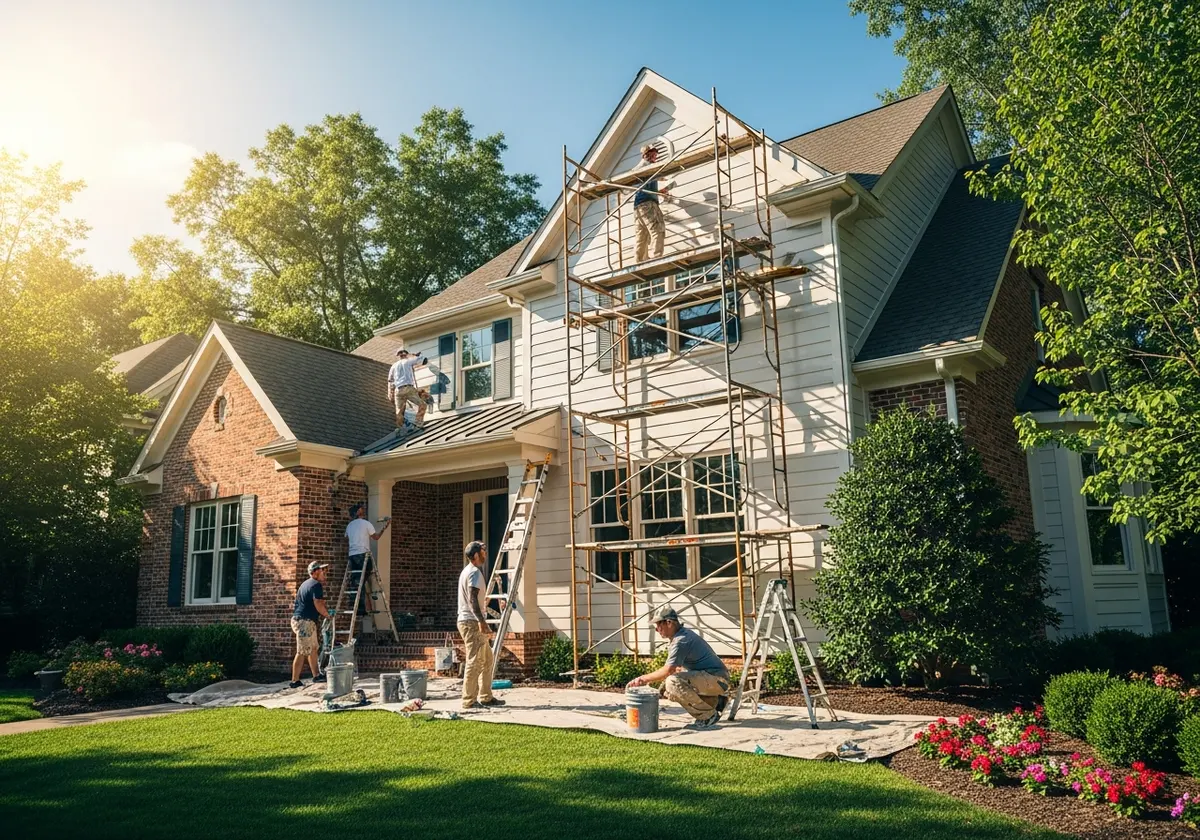
Exterior Painting
Protect and transform your home's exterior — prep, products, timing, and curb appeal.

Commercial Painting
Offices, retail, and industrial spaces painted on schedule with minimal disruption.
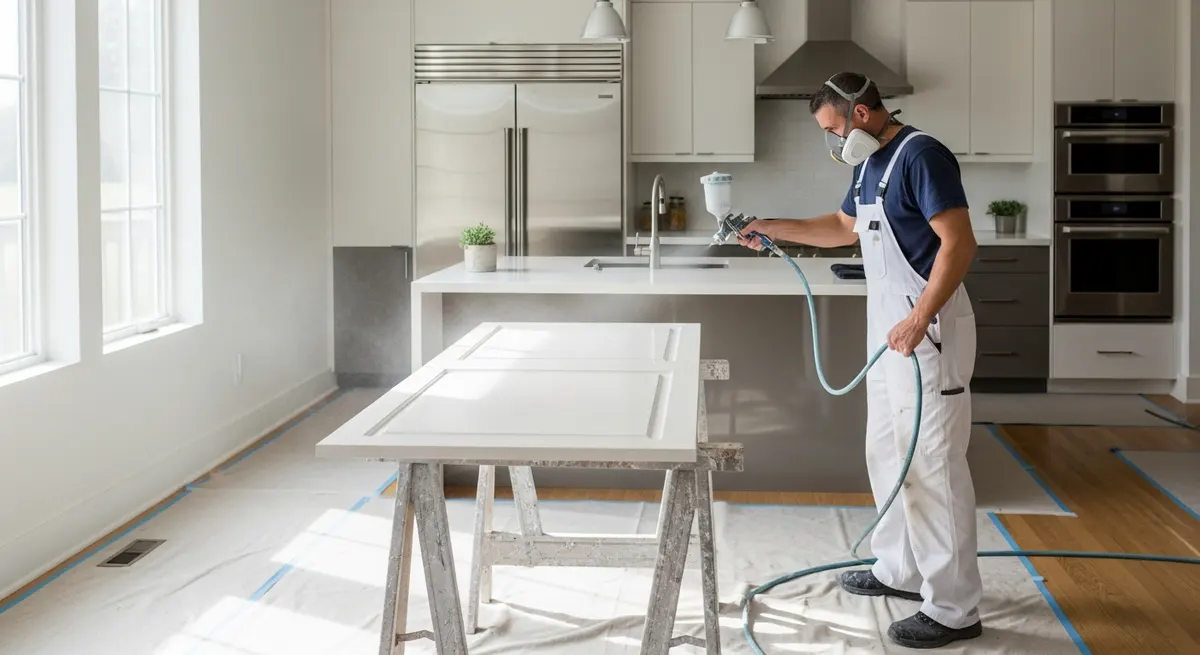
Cabinet Refinishing
Refresh a kitchen for a fraction of replacement cost — the pro spray-finish process explained.
Prepare your project brief
Build a clear scope to discuss with a contractor. Directory listings are being restored; this does not confirm local availability.