
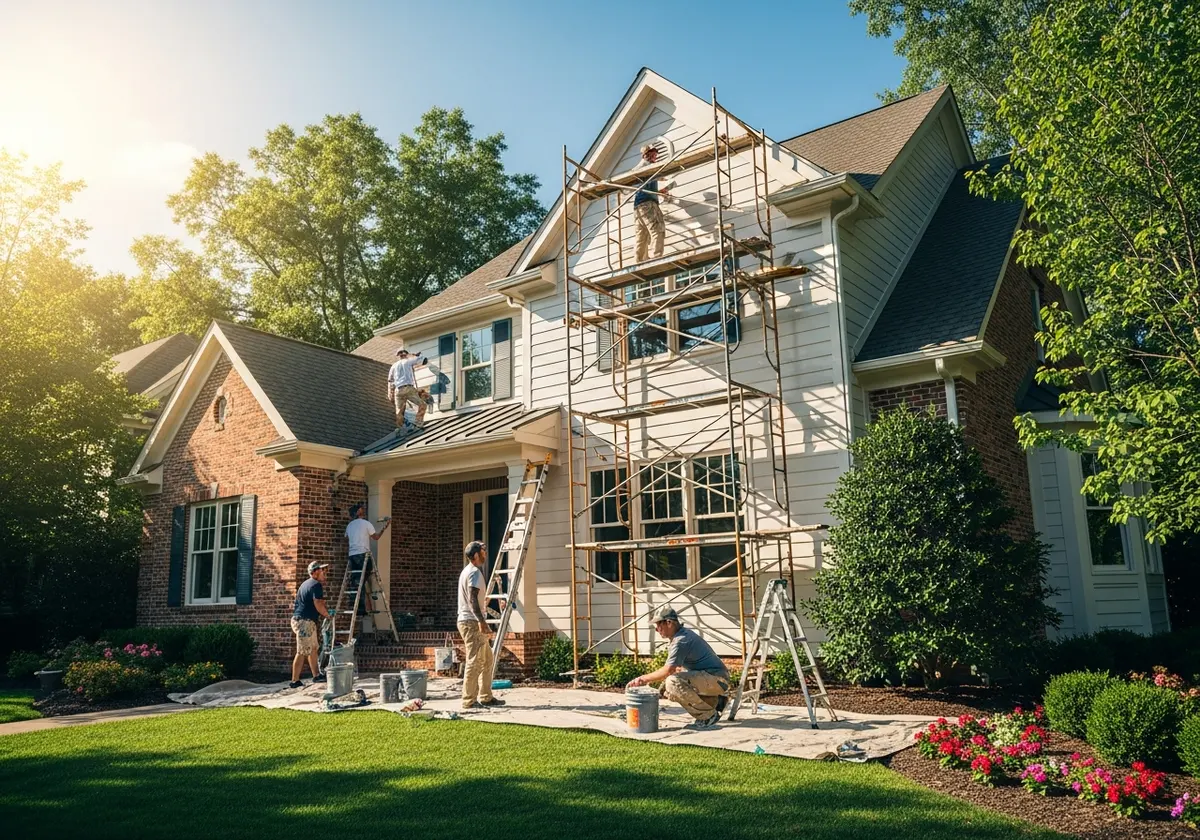
Quick Answer
Exterior painting typically costs $1.50 to $4.50 per square foot, with most single-family homes running $3,000 to $12,000. A professional job lasts 7 to 10 years and protects siding from moisture, UV, and rot. The price depends on siding material, home height, surface condition, paint grade, and local labor rates, and thorough prep — washing, scraping, and priming — is what makes the finish last.
Key Takeaways
- Exterior painting costs roughly $1.50-$4.50 per square foot; most homes run $3,000-$12,000.
- A quality exterior job lasts 7-10 years; prep work like washing, scraping, and priming determines longevity.
- 100% acrylic latex is the best all-around exterior paint for flexibility and fade resistance.
- Weather is critical: paint at 50-85 degrees Fahrenheit, low humidity, with dry surfaces and no rain for 24-48 hours.
- Exterior paint is protection, not just looks - it prevents wood rot, moisture damage, and costly structural repairs.
What Is Exterior Painting?
Exterior painting is the preparation and coating of a building's outside surfaces — siding, trim, fascia, soffits, doors, shutters, railings, and sometimes masonry and stucco. Unlike interior work, exterior painting is first and foremost a protective system. The coating is your home's primary defense against sun, rain, wind, temperature swings, insects, and moisture intrusion. Aesthetics matter enormously for curb appeal, but the paint film is doing critical structural work every single day, shielding the wood and sheathing beneath it from the elements.
Because exterior surfaces endure constant environmental stress, the margin for error is small. Skipped prep, the wrong product for the substrate, or application in poor weather can cause a paint job to fail in a year or two rather than lasting a decade. A well-executed exterior project is the result of disciplined sequencing: clean, repair, prime, caulk, and only then apply finish coats in the right conditions. When any of those steps is rushed or skipped, the failure shows up later as peeling, blistering, or chalking that forces an expensive redo.
Prepare a clear scope using our quote comparison checklist. Confirm service area, credentials and availability directly with any contractor. Directory listings are being restored.
What exterior painting typically includes
- Siding — wood, fiber cement, vinyl, aluminum, stucco, or masonry, the largest and most important surface.
- Trim, fascia, and soffits — the framing details around the roofline, windows, and corners that frame the home.
- Doors and shutters — high-impact accent surfaces that define the home's character and color scheme.
- Railings, columns, and porches — high-wear features that need durable, often enamel-grade coatings.
- Garage doors and outbuildings — frequently included to keep the whole property looking cohesive.
Exterior painting overlaps with several related services. Most quality jobs begin with pressure washing, and many homeowners pair an exterior repaint with deck and fence staining to refresh the entire property at once. Understanding where each task fits helps you budget accurately and avoid paying for overlapping mobil- izations.
The Benefits: Protection Meets Curb Appeal
Exterior painting delivers a rare combination of immediate visual payoff and long-term structural protection. It is consistently ranked among the best investments for curb appeal and resale value, and it is one of the few improvements that pays you back twice: once in how the home looks and again in the repairs it prevents. Few other projects touch both aesthetics and structural health so directly.
Structural protection
The paint film seals out moisture, the single greatest enemy of any home. Properly painted and caulked surfaces prevent water from reaching wood, where it causes rot, and keep it out of joints and gaps where it leads to mold and decay. A maintained coating can prevent thousands of dollars in repairs to siding, trim, and underlying sheathing. By the time bare wood is visible, deterioration has often already begun, which is why repainting on schedule is far cheaper than waiting for failure.
UV and weather resistance
Quality exterior paint contains UV-resistant pigments and binders that slow fading and chalking. It also remains flexible, expanding and contracting with the surface through heat and cold so it resists cracking and peeling far better than interior or low-grade paint. This elasticity is what allows a premium acrylic to survive a decade of thermal cycling that would destroy a cheaper coating in a couple of seasons.
Curb appeal and value
Nothing transforms a home's first impression like fresh exterior paint. A crisp, modern color scheme makes a property look newer, cleaner, and better cared for — translating directly into stronger offers and faster sales. For sellers, it is often the highest-return project available, and it dramatically improves listing photos, which is where most buyers form their first opinion. Appraisers and agents alike treat a sound, attractive exterior as a signal of overall maintenance.
Pest and mildew defense
A sound paint film denies insects the cracks and exposed wood they exploit, and mildew-resistant formulations help keep shaded, damp areas clean. This is especially valuable in humid and coastal climates, where biological growth and wood-boring pests can do real damage to an unprotected exterior. The right coating, applied correctly, is a quiet but constant line of defense.
Energy and comfort effects
The color and quality of an exterior finish have a measurable effect on how a home handles heat. Lighter, more reflective colors bounce away a meaningful share of solar radiation, keeping wall assemblies cooler and easing the load on air conditioning during hot months, while very dark colors absorb heat and can run noticeably warmer on sun-facing walls. Specialty "cool" exterior pigments are engineered to reflect more infrared energy even in darker shades. A sound, well-sealed coating also works alongside caulk and weatherstripping to limit air infiltration around trim, windows, and joints, reducing the small drafts that quietly raise heating and cooling bills. None of this rivals insulation or new windows, but it is a real, no-extra-cost benefit of choosing the right color and keeping the film intact.
Think of paint as maintenance, not decoration
How Much Does Exterior Painting Cost?
Exterior painting is usually priced by square footage of surface area, by the size and number of stories of the home, or as a total project bid. Nationally, expect roughly $1.50 to $4.50 per square foot, with most single-family homes landing between $3,000 and $12,000. The wide range reflects how many variables affect the final number, from siding texture to how hard the surfaces are to reach safely.
| Home Size / Item | Typical Cost Range | Notes |
|---|---|---|
| Small single-story (1,000 sq ft) | $2,500 - $5,000 | Simple access |
| Average two-story (2,000 sq ft) | $4,500 - $9,000 | More height and trim |
| Large two-story (3,000+ sq ft) | $8,000 - $15,000+ | Complex, multi-story |
| Trim only | $1,000 - $3,000 | Fascia, soffits, windows |
| Front door (each) | $150 - $500 | Prep plus enamel finish |
| Garage door (each) | $150 - $400 | Cleaning and two coats |
| Deck or fence (separate) | $1,000 - $4,000 | Stain or paint |
What drives exterior pricing
- Siding material. Stucco and rough masonry absorb more paint and take longer than smooth siding; wood often needs more prep and spot priming.
- Height and access. Two- and three-story homes, steep lots, and tight access require ladders, scaffolding, or lifts and far more labor hours.
- Surface condition. Extensive scraping, sanding, wood repair, and caulking add significant time, sometimes doubling the prep budget on a neglected home.
- Number of colors and detail. Multi-color schemes, ornate Victorian trim, and shutters increase masking and brushwork.
- Paint grade. Premium 100% acrylic costs more per gallon but lasts years longer, lowering the true lifetime cost.
- Region. Labor rates in major metros can be 50 to 100 percent higher than in smaller markets.
Prepare a clear scope using our quote comparison checklist. Confirm service area, credentials and availability directly with any contractor. Directory listings are being restored.
The hidden cost of cheap bids
Estimating Exterior Paint Quantity and Coverage
Whether you are sanity-checking a contractor's material line or buying paint for a DIY weekend, knowing how much paint a house needs prevents both costly overbuying and the worse problem of running short mid-coat and ending up with a slightly different batch color. The math starts with measuring the paintable wall area, not the floor area, and then dividing by the product's stated spread rate. Most exterior acrylics cover roughly 250 to 400 square feet per gallon on a single coat, with smooth, primed siding landing near the top of that range and rough or porous surfaces near the bottom.
How to calculate paintable area
- Measure each wall. Multiply width by height for every exterior wall and add the totals together to get gross wall area.
- Subtract large openings. Deduct the area of windows and doors only if they total a meaningful share; many estimators skip small openings to build in a safety margin.
- Add a texture factor. Multiply by about 1.1 for lap siding, 1.2 to 1.5 for stucco, masonry, or deeply grooved board, since texture increases the true surface area paint must cover.
- Divide by coverage and coats. Divide adjusted area by the spread rate, then multiply by the number of coats — almost always two for siding.
| Home Size | Approx. Wall Area | Gallons (2 coats) |
|---|---|---|
| Small single-story | 1,200 - 1,600 sq ft | 8 - 12 gallons |
| Average two-story | 2,500 - 3,200 sq ft | 15 - 22 gallons |
| Large two-story | 3,500 - 4,500 sq ft | 22 - 32 gallons |
| Trim and fascia only | 300 - 600 sq ft | 2 - 4 gallons |
| Front and garage doors | 100 - 200 sq ft | 1 - 2 gallons |
Prepare a clear scope using our quote comparison checklist. Confirm service area, credentials and availability directly with any contractor. Directory listings are being restored.
Best Paint and Products for Exteriors
Exterior paint must do far more than interior paint: resist UV, flex with temperature swings, repel water while remaining breathable, and resist mildew. Product selection is critical, and the right choice depends on both your substrate and your climate. The good news is that modern coatings are dramatically better than those of even a decade ago.
100% acrylic latex
The all-around best choice for most homes. It is flexible, durable, fade- and mildew-resistant, breathable, and adheres to most substrates. Its elasticity lets it move with the surface, dramatically reducing cracking and peeling. Premium acrylics also hold color longer, which matters most for deep and saturated shades that are prone to fading.
Elastomeric coatings
Thick, highly flexible coatings designed for stucco and masonry. They bridge hairline cracks and provide excellent waterproofing, making them popular in hot, dry, and crack-prone regions. Because they build a heavy film, they must be applied to sound surfaces and at the correct thickness, or they can trap moisture rather than shed it.
Oil-based and alkyd
Now limited mostly to specialty applications — certain primers, metal, and high-wear surfaces — where a hard, tightly bonded film is needed. Higher VOCs and longer dry times have pushed most exterior work to waterborne acrylics. You can read more about volatile organic compounds and why low-VOC products matter from the EPA's overview of VOCs.
Primers matter
Bare wood, weathered surfaces, repairs, stains, and bare metal all require the correct primer for adhesion and stain blocking. Skipping primer on these surfaces is a guaranteed path to early failure. Tannin- rich woods like cedar and redwood need a stain-blocking primer to keep bleed-through from discoloring light topcoats.
| Substrate | Recommended Coating | Repaint Interval |
|---|---|---|
| Wood siding | 100% acrylic latex plus primer on bare wood | 5-7 years |
| Fiber cement | 100% acrylic latex | 10-15 years |
| Stucco | Acrylic or elastomeric, masonry primer | 8-12 years |
| Vinyl | Vinyl-safe acrylic | 8-10 years |
| Brick / masonry | Breathable masonry paint or limewash | 10-20 years |
| Metal | Bonding primer plus acrylic or DTM enamel | 8-12 years |
Whatever product you choose, buy the best grade you can afford. The difference between a builder-grade and a top-tier exterior paint is a few dollars per gallon but several years of service life. Since labor far outweighs material cost, cutting corners on paint to save a little money is one of the worst trades a homeowner can make.
Sheen selection for exteriors
Sheen is a practical choice outdoors, not just a stylistic one. Higher gloss is more durable and easier to wash but also highlights every imperfection in the surface, so the sheen should match both the surface and how visible it is. As a general rule, use flat or low-sheen on large siding fields where you want imperfections hidden, satin or low-luster for siding that needs more washability, and semi-gloss on trim, doors, shutters, and railings where durability and a crisp accent matter most.
- Flat / matte — hides surface flaws and old patches best; ideal for stucco and weathered siding, least washable.
- Satin / low-luster — the most popular all-around siding sheen, balancing modest shine with good cleanability.
- Semi-gloss — tough and wipeable, reserved for trim, doors, and high-touch details that benefit from contrast and wear resistance.
The Professional Exterior Painting Process
Quality exterior work follows a strict sequence built around protection and adhesion. Each step exists to make the finish last, and a good contractor can explain why every stage matters. The steps below mirror the structured process reputable crews follow on nearly every home.
- Inspection. The crew assesses siding condition, finds failing paint, rot, caulk failure, and mildew, and confirms scope and colors before quoting the work.
- Pressure washing. The entire surface is washed to remove dirt, chalk, mildew, and loose paint, then allowed to dry fully for 24 to 48 hours.
- Scraping and sanding. Loose and peeling paint is scraped and feathered, and glossy areas are de-glossed so the new coat can grip.
- Repairs. Rotted wood is replaced, holes filled, and damaged trim restored before any paint touches the surface.
- Priming. Bare wood, repairs, stains, and bare metal receive the appropriate primer for adhesion and stain blocking.
- Caulking. Gaps around windows, doors, trim, and joints are sealed to block water intrusion and finish the lines.
- Masking and protection. Windows, lights, landscaping, walkways, and roofing are covered to keep overspray and drips off them.
- Application. Two finish coats are applied by brush, roller, or sprayer with back-rolling, always maintaining a wet edge.
- Trim and accents. Trim, doors, shutters, and details are finished, often in a contrasting durable enamel.
- Cleanup and walkthrough. The site is cleaned and the homeowner inspects the finished work under good light for touch-ups.
A crew that openly walks you through this sequence — and lets you see the surface after washing and scraping but before paint — is a crew that has nothing to hide. The most common corner-cutting happens in steps two through five, precisely the work that is invisible once the finish coats go on.
Application methods and why they matter
How the paint goes on is as important as the sequence leading up to it. Professionals typically choose among brushing, rolling, and spraying based on the surface, and the best crews combine them. Spraying is fast and lays down an even film on large or textured areas, but on its own it can leave a thin, poorly bonded coat that sits on the surface rather than working into it. That is why quality crews spray and back-roll or back-brush — spraying for speed and uniformity, then immediately working the coating into the substrate by hand for adhesion. Brushing remains the standard for trim, corners, and detail, where control matters more than speed, while rolling suits flat siding fields. Maintaining a wet edge throughout prevents the lap marks and sheen differences that reveal where one section stopped and the next began, and respecting the recoat window between coats ensures the two films bond into a single durable system.
Ask to inspect after prep
Surface Preparation: Wash, Scrape, Repair, Prime
Exterior prep is even more demanding than interior prep because the surface is dirtier, more weathered, and harder to access. It is where most of the labor — and most of the durability — lives. A flawless coat of premium paint over poor prep will still fail; sound prep under an average paint will outlast it. Professionals routinely spend more hours preparing a home than actually painting it.
Washing
Years of dirt, pollen, chalk, and mildew must come off before painting. Pressure washing or hand scrubbing creates a clean surface the new paint can grip. The surface must then dry completely, typically 24 to 48 hours, because painting over trapped moisture is a leading cause of blistering and peeling. For a deeper look at this stage, see our guide to pressure washing.
Scraping and sanding
All loose and peeling paint is removed and edges feathered so they do not telegraph through the new coat. This is tedious but essential — new paint over loose paint simply peels off with it. Feathering the transition between bare and painted areas is what keeps old paint edges from showing as ridges under the fresh finish.
Wood and surface repair
Soft, rotted wood is replaced; nail pops, cracks, and holes are filled. Catching and fixing rot during a paint project prevents far costlier structural repairs later. A good crew probes suspect areas with a tool to find hidden soft spots before they are painted over and forgotten.
Caulking and priming
Fresh caulk seals the gaps where water sneaks in, and primer ensures the finish bonds to bare and repaired areas. Together they form the foundation of a job that lasts a decade. Use a high-quality, paintable exterior caulk rated for the joint movement it will see through seasonal expansion and contraction.
Pre-1978 homes need lead-safe prep
Weather and Timing Considerations
No factor affects exterior painting more than weather. Paint is a chemical product that cures correctly only within a specific range of temperature and humidity, and applying it outside that window guarantees problems no amount of skill can overcome. Smart scheduling around the forecast is part of the job.
Temperature
Most paints apply best between 50 and 85 degrees Fahrenheit. Too hot and the paint skins over before it can level, causing lap marks and poor adhesion; too cold and the film cannot form or cure. Always work within the product's stated range and account for overnight lows, since a warm afternoon can still drop below the minimum after dark while the film is still curing.
Humidity and moisture
High humidity slows drying and can trap moisture, while painting a damp surface guarantees peeling. Allow surfaces to dry after washing or rain, and avoid painting late in the day when dew may settle on fresh paint. In humid regions, crews often start after the morning moisture has burned off and stop well before evening dew sets in.
Seasonal and regional timing
- Hot, sunny climates — chase the shade around the house and avoid painting walls in direct afternoon sun; spring and fall are usually best.
- Cold climates — finish before nighttime lows drop below the paint's minimum; late spring through early fall is the reliable window.
- Humid and coastal climates — favor low-humidity days, use mildew-resistant products, and rinse salt residue thoroughly before painting.
Because weather drives the schedule, build flexibility into your timeline and expect that a quality contractor will pause for rain rather than push through it. A crew willing to paint damp siding to stay on schedule is a crew willing to compromise your finish.
Climate and Regional Considerations
Day-to-day weather decides when you can paint, but your regional climate decides what you should paint with and how often you will repeat the job. The same premium acrylic that holds a finish for twelve years in a mild, temperate region may need recoating in six on a sun-blasted desert wall or a salt-sprayed coastal elevation. Matching the coating system, color depth, and maintenance rhythm to your climate is one of the most overlooked factors in long-term performance, and it explains why a national average lifespan tells you so little about your specific home.
High-UV and hot-dry regions
Intense, year-round sun is the fastest way to degrade an exterior finish. Ultraviolet radiation breaks down binders and pigments, causing fading, chalking, and brittleness, with south- and west-facing walls always failing first. In the desert Southwest and other high-altitude, high-UV areas, choose paints with strong UV-resistant resins, lean toward lighter colors that reflect heat and hide fade, and expect to repaint sooner. Elastomeric coatings are popular on stucco here because they bridge the hairline cracks that thermal expansion opens up.
Humid, coastal, and freeze-prone climates
- Humid and Gulf regions. Persistent moisture and shade feed mildew; use mildew-resistant formulations, allow extra dry time after washing, and paint within the morning-to-afternoon dry window.
- Coastal and salt-air zones. Salt accelerates chalking and corrodes metal fasteners and fixtures; rinse salt residue before painting, prime bare metal with a corrosion-inhibiting primer, and rinse siding more often between repaints.
- Cold and freeze-thaw climates. Water that gets behind the film expands as it freezes and pops paint loose; flawless caulking, breathable coatings, and finishing before nighttime lows fall below the paint's minimum are essential.
- Mixed and temperate regions. The widest comfortable painting window, but spring pollen and summer storms still require washing and forecast discipline.
Microclimate matters too: a heavily shaded north wall under tree cover stays damp and grows mildew long after the rest of the house has dried, while a wall above a reflective patio or pool can run far hotter than the ambient temperature. Local elevation, prevailing wind, and proximity to water all shift the equation. Because conditions vary so much block to block, comparing notes with painters in your city who know the regional failure patterns is one of the most practical things a homeowner can do before committing to a product and a repaint schedule.
Choosing the Right Exterior Colors
Exterior color is a bigger commitment than interior color: it is seen by the whole neighborhood, it must work with fixed elements like the roof and stone, and it is far more work to change. A thoughtful, three-part palette almost always reads as more polished than a single flat color.
Work with fixed elements
Your roof, brick, stone, and even the driveway have undertones you cannot easily change. Choose siding and trim colors that harmonize with those permanent features. A warm-toned roof, for example, pairs better with warm neutrals than with cool grays that fight it.
Build a layered scheme
Most attractive exteriors use three colors: a dominant field color for the siding, a complementary trim color, and an accent for the front door and shutters. This layering creates depth and highlights architectural detail rather than flattening it into a single tone.
Test in real light
Paint large sample boards and view them on different sides of the house at different times of day. Exterior colors shift dramatically between bright sun and shade, and a swatch that looks perfect on a north wall may look washed out in full southern light.
Mind the rules and the neighbors
Guidance by Siding Type
The right approach depends heavily on what your home is clad in. Each substrate has its own prep, product, and longevity profile, and matching the system to the surface is what separates a decade-long finish from a short-lived one.
Wood siding
Classic and beautiful but maintenance-intensive. Wood needs diligent scraping, sanding, priming of bare areas, and caulking. It typically needs repainting every 5 to 7 years and rewards premium, flexible acrylic paint. Tannin-rich species like cedar and redwood require a stain-blocking primer to prevent discoloration bleeding through light colors.
Fiber cement
A durable, increasingly popular siding that holds paint exceptionally well. Pre-primed boards take quality acrylic readily and can hold a finish for 10 to 15 years with proper application. Caulk joints and butt ends carefully, since those are the first places water tries to enter.
Stucco and masonry
Porous surfaces that require breathable, elastomeric, or masonry-specific coatings. They consume more paint due to texture and may need a masonry primer and crack repair. Done right, stucco coatings are very long-lasting and can mask hairline cracking when an elastomeric is used.
Vinyl and aluminum
Both can be painted with the right products. Vinyl must be painted in colors no darker than the original to avoid heat-related warping, using vinyl-safe formulations engineered to flex with the panel. Aluminum needs cleaning and a bonding primer to prevent the chalky oxidized layer from undermining adhesion.
Brick
Brick can be painted for a dramatic transformation, but it is essentially permanent and requires breathable masonry paint to avoid trapping moisture inside the wall. Limewash and mineral coatings are popular breathable alternatives that bond chemically with the masonry and weather more naturally over time.
| Siding | Key Prep Step | Best Product |
|---|---|---|
| Wood | Scrape, sand, prime bare wood | Acrylic latex plus stain-blocking primer |
| Fiber cement | Caulk joints and butt ends | 100% acrylic latex |
| Stucco | Patch cracks, masonry primer | Acrylic or elastomeric |
| Vinyl | Clean thoroughly, no dark colors | Vinyl-safe acrylic |
| Aluminum | Remove chalk, bonding primer | Acrylic or DTM enamel |
| Brick | Clean, repoint, test breathability | Breathable masonry paint or limewash |
Engineered wood and specialty claddings
Beyond the mainstream substrates, several engineered and specialty claddings call for their own approach. Engineered wood siding — composite boards made from wood fibers and resins — is usually factory-primed and takes quality acrylic well, but its joints and any field-cut edges must be sealed and primed carefully, since exposed core material swells when it absorbs water. Hardboard and older composite sidings are especially prone to moisture damage at the bottom edges and need diligent caulking and a finish that sheds water. T1-11 and plywood panel siding require attention to the vertical grooves, where coverage is easy to miss and water tends to collect. Cement-based and synthetic stucco systems (including EIFS) demand breathable, manufacturer-approved coatings so the wall assembly can dry to the exterior rather than trapping moisture inside. When in doubt about an unusual surface, confirm the substrate with your contractor and check the siding maker's painting guidelines, since using the wrong product can void both the siding warranty and the paint warranty at once.
How Long Does Exterior Paint Last?
A professional exterior paint job typically lasts 7 to 10 years, but the real range runs from about 5 years on neglected wood in a harsh climate to 15 years or more on fiber cement in a mild one. Three factors set the lifespan: the substrate, the quality of prep and product, and the environment the home sits in.
What shortens paint life
- Intense UV exposure on south- and west-facing walls fades and degrades the film fastest.
- Moisture and freeze-thaw cycles push water behind the film and pop it loose as ice expands.
- Salt air in coastal areas accelerates chalking and corrosion on metal components.
- Poor prep — painting over dirt, chalk, or loose paint — undermines adhesion regardless of climate.
What extends it
Thorough washing, complete scraping, spot priming, quality caulk, and two coats of premium 100% acrylic are the proven levers. Beyond application, simple upkeep — rinsing siding annually, clearing gutters so water sheds away from walls, and trimming vegetation that holds moisture against the house — measurably extends service life. Catching a small failure early and touching it up keeps a localized problem from spreading into a full repaint.
Watch for early warning signs between repaints: chalky residue on your hand when you rub the siding, hairline cracking, fading on sun-exposed walls, and any spots where bare substrate is starting to show. Addressing these promptly is the difference between a touch-up and a teardown.
DIY vs. Hiring a Professional
Exterior painting is one of the most ambitious DIY projects a homeowner can take on, and the calculus is different from interior work because of height, scale, and weather. A single-story home with sound, accessible siding is within reach for a committed DIYer; a multi-story home with significant prep is squarely professional territory.
The case for DIY
You can save substantially on labor, which is the bulk of the cost, and you control the pace and the standard. For a small, one-story home in good condition, a careful homeowner with the right ladders, a sprayer or quality brushes and rollers, and a few clear-weather weekends can achieve a respectable result.
The case for hiring a pro
- Safety. Most serious exterior-painting injuries involve ladders and falls; pros carry the right equipment and insurance.
- Speed. A crew finishes in days what takes a homeowner weeks, shrinking weather risk and disruption.
- Prep expertise. Pros diagnose rot, chalking, and adhesion issues and fix them correctly the first time.
- Equipment. Sprayers, scaffolding, and lifts produce a smoother, faster finish than handheld tools alone.
- Warranty. Reputable contractors stand behind the work, giving you recourse if anything fails early.
| Factor | DIY | Professional |
|---|---|---|
| Upfront cost | Lower (materials only) | Higher (labor included) |
| Time to complete | Several weekends | 3-6 days typical |
| Safety risk | High on multi-story | Managed with gear and insurance |
| Finish quality | Varies with skill | Consistent, sprayer-grade |
| Best for | Small one-story, sound siding | Multi-story, heavy prep, rot |
Prepare a clear scope using our quote comparison checklist. Confirm service area, credentials and availability directly with any contractor. Directory listings are being restored.
How to Hire an Exterior Painter
The contractor you choose matters more than the paint you buy. The same home, painted by a meticulous crew versus a careless one, can last twice as long. Vetting carefully up front protects you from the most common and most expensive paint failures.
Verify the essentials
- License and insurance. Confirm the contractor carries liability coverage and workers' compensation; ask for certificates.
- Lead-safe certification. Required for pre-1978 homes under federal law; verify it before any scraping or sanding.
- References and reviews. Look for recent, verified reviews and ask to see homes painted three or more years ago.
- Written, detailed estimate. The bid should specify prep, number of coats, products by name, and surfaces included.
Compare apples to apples
Prepare a clear scope using our quote comparison checklist. Confirm service area, credentials and availability directly with any contractor. Directory listings are being restored.
Ask the right questions
Find out who is actually on the crew, whether subcontractors are used, how they handle weather delays, what the warranty covers and for how long, and what the payment schedule looks like. Avoid any contractor who demands a large cash deposit up front or pressures you to skip a written contract. For larger or commercial properties, our commercial painting guide covers additional considerations like scheduling and compliance.
Never pay in full up front
Warranties: What They Cover and For How Long
A warranty is one of the clearest signals of how much confidence a contractor has in their own prep and product selection, yet it is also one of the most misunderstood parts of an exterior painting agreement. There are really two separate warranties at work: the manufacturer's product warranty on the paint itself, and the contractor's labor warranty on the workmanship. They cover different things, and a strong job needs both to be meaningful. Read each carefully before you sign, because the headline number — "25-year paint" or "lifetime warranty" — rarely means what homeowners assume.
Product vs. workmanship warranties
The paint manufacturer warrants that the product will not fail prematurely due to a manufacturing defect, often for 15, 25, or even a stated lifetime. In practice these cover the cost of replacement paint only — not the labor to repaint — and they are voided if the product was applied outside specification, over poor prep, or on an unsuitable substrate. The contractor's labor warranty is what actually protects you, because most real-world failures come from application and prep, not the paint. A typical reputable exterior labor warranty runs 2 to 7 years, covering peeling, blistering, and excessive flaking caused by workmanship.
| Warranty Type | Typical Term | What It Covers |
|---|---|---|
| Manufacturer product | 15 - 25+ years | Replacement paint for defects only |
| Contractor labor (standard) | 2 - 3 years | Peeling, blistering from workmanship |
| Contractor labor (premium) | 5 - 7 years | Broader workmanship, prorated repairs |
| Prorated coverage | Varies | Declining payout as years pass |
Common exclusions to read for
- Normal fading and chalking from UV exposure, which is considered expected wear rather than failure.
- Substrate problems like wood rot, settling cracks, or moisture intrusion from a roof or gutter leak behind the paint.
- Acts of nature such as hail, floods, and storm damage.
- Prorating, where the payout shrinks each year, so a "7-year" warranty may cover only a fraction of repair cost by year five.
Prepare a clear scope using our quote comparison checklist. Confirm service area, credentials and availability directly with any contractor. Directory listings are being restored.
Common Exterior Painting Mistakes
Most exterior paint failures trace back to a short list of avoidable mistakes. Knowing them helps you recognize when a job — your own or a contractor's — is headed for trouble before it is too late to fix.
Skipping or rushing the wash
Painting over dirt, chalk, and mildew is the number-one cause of premature peeling. The new film simply cannot bond to a contaminated surface, and the bond it does form releases within a season or two.
Painting in the wrong conditions
Applying paint in direct hot sun, on damp surfaces, or with rain or dew in the forecast undermines curing. Conditions that are too cold prevent the film from forming at all, leaving a soft, vulnerable coat.
Ignoring prep and repairs
Failing to scrape loose paint, replace rotted wood, or spot-prime bare areas means the new coat fails wherever the substrate was unsound. Paint cannot bridge over rot or hold to powdery old paint.
Using the wrong product or too few coats
Cheap paint, the wrong formulation for the substrate, or a single thin coat all shorten lifespan dramatically. Two coats of the correct premium product is the baseline for a job meant to last a decade.
Mishandling cleanup and waste
Leftover paint and rinse water are not ordinary trash. Dispose of paint and related materials responsibly through your community's program, as described in the EPA's guidance on household hazardous waste, and follow worker-safety practices outlined by OSHA when sanding, working at height, or handling solvents.
Maintenance and Aftercare
A fresh exterior paint job is an investment, and modest upkeep protects it for years longer. The goal of maintenance is simple: keep moisture, dirt, and biological growth from working their way under the film and catch small problems while they are still small.
Let new paint cure
Although exterior paint feels dry within hours, it continues to cure for two to four weeks. Avoid pressure washing or leaning equipment against fresh paint during this window, and let it harden fully before any aggressive cleaning.
Annual cleaning
Rinse siding once or twice a year with a garden hose and a soft brush to remove dirt, pollen, and the start of mildew. In shaded or humid areas, a mild cleaning solution keeps biological growth in check before it stains or degrades the film.
Inspect and touch up
- Walk the perimeter twice a year looking for cracks, peeling, caulk failure, and bare spots.
- Recaulk failed joints promptly to keep water out of the wall assembly.
- Touch up small failures before they spread, keeping a labeled can of your colors for the purpose.
- Keep water moving away from walls by clearing gutters and directing downspouts.
Manage the surroundings
Trim shrubs and trees so they do not hold moisture against the siding or scrape the finish in the wind. Keep sprinklers from spraying the walls, and ensure grading and downspouts carry water away from the foundation. These small habits routinely add years to a paint job's life and reduce the odds of an early, expensive repaint.
Finally, keep a simple record of what was used and when. Note the brand, line, color codes, and sheen for siding, trim, and accents, along with the date the work was completed. That single page of information makes future touch-ups effortless, helps the next contractor match what is already on the house, and serves as useful documentation for buyers if you eventually sell. Treating your exterior finish as a maintained system rather than a one-time event is the surest way to protect both the look of your home and the structure underneath it for the long haul.
Frequently Asked Questions
Related Painting Guides
Commercial Painting
Offices, retail, and industrial spaces painted on schedule with minimal disruption.
Cabinet Refinishing
Refresh a kitchen for a fraction of replacement cost — the pro spray-finish process explained.
Deck & Fence Staining
Stain vs. seal, prep, product choice, and timing to protect wood for years.
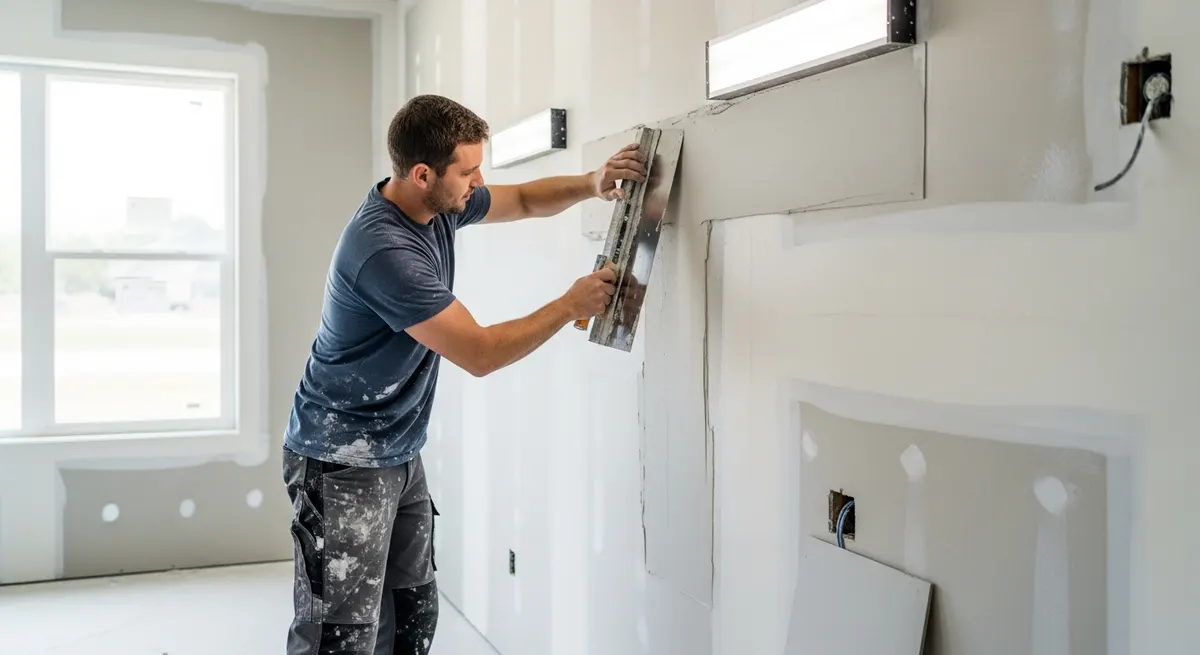
Wallpaper & Drywall
Wallpaper removal and drywall repair done right so your new paint lays flawless.
Prepare your project brief
Build a clear scope to discuss with a contractor. Directory listings are being restored; this does not confirm local availability.