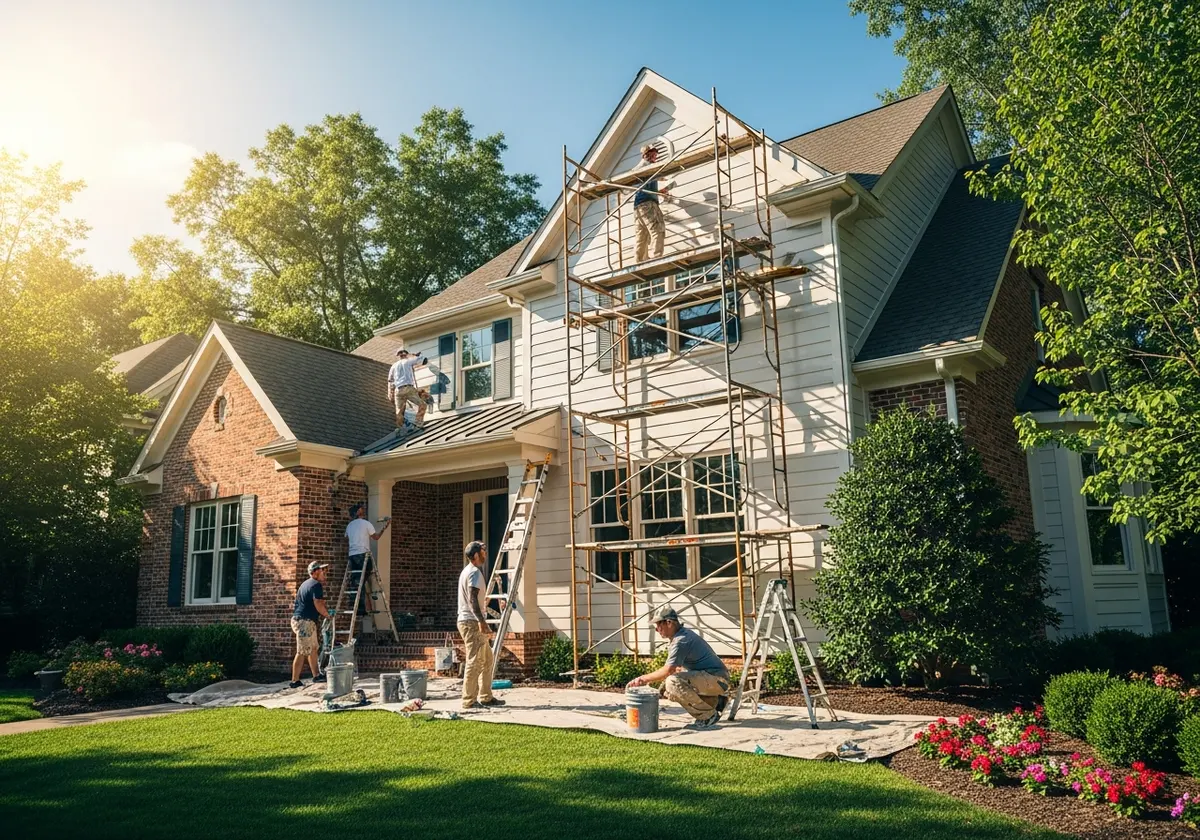
Quick Answer
Commercial painting typically costs $1 to $4 per square foot for interiors and $1.50 to $5 per square foot for exteriors, including labor and materials. It differs from residential work in scale, coatings, safety compliance, and scheduling — projects are usually bid by the square foot and timed around business hours so your facility stays open.
Key Takeaways
- Commercial painting runs roughly $1-$4 per square foot interior and $1.50-$5 exterior, with large open spaces costing less per foot.
- Jobs are bid by square foot, linear foot, or lump sum; surface prep, access equipment, and scheduling drive the price.
- Specialty coatings like epoxy, elastomeric, intumescent, anti-microbial, and DTM solve durability, hygiene, and code requirements.
- Good contractors phase work after-hours and in zones so your business never has to close.
- Always verify licensing, general liability, workers' comp, and certificates of insurance before signing a contract.
What Is Commercial Painting?
Commercial painting is the preparation and application of protective and decorative coatings to business and institutional properties — office buildings, retail stores, restaurants, hotels, hospitals, schools, warehouses, and industrial plants. Unlike a home repaint, a commercial project is a managed undertaking that balances appearance, durability, code compliance, safety, and the uninterrupted operation of a working facility. The paint on the wall is the visible result of planning, logistics, and engineering that happens long before the first coat goes on.
A commercial coating system does far more than make a space look professional. It protects expensive building assets from moisture, corrosion, abrasion, ultraviolet degradation, and chemical exposure. It can improve safety with high-visibility markings and slip-resistant floors, support hygiene with washable anti-microbial surfaces, and even contribute to fire protection through engineered intumescent systems. For many businesses, a well-maintained finish is also a direct reflection of the brand — the first thing customers, patients, guests, and prospective tenants notice.
Commercial painting spans an enormous range of scope. On one end is a single suite of offices refreshed over a weekend; on the other is a multi-building campus, a high-rise exterior requiring swing stages, or a manufacturing floor coated with chemical-resistant epoxy. What unites them is a disciplined approach to surface preparation, product selection, application, and project management. This guide explains how commercial painting works, what it costs, which coatings to specify, and how to choose a contractor who can deliver a durable result without shutting down your operations.
It is worth noting how broad the term "commercial painting" really is. A property manager may use it to describe repainting apartment corridors and unit turns; a hospital facilities director may mean coating an operating-room wing with hygienic, low-emission finishes; a plant engineer may mean blasting and recoating structural steel against corrosion. Each of these falls under the same professional discipline, but the products, crews, certifications, and scheduling could hardly be more different. The best contractors are fluent across this range and tailor every element of the job to the specific building, occupancy, and performance goals rather than applying a one-size-fits-all approach.
What a commercial paint project commonly includes
- Interior walls and ceilings — large continuous surfaces that set the tone of lobbies, offices, and corridors.
- Exterior facades and trim — stucco, masonry, concrete, metal panels, and EIFS that protect the building envelope.
- Floors and decks — epoxy, urethane, and polyaspartic systems for warehouses, garages, and production areas.
- Structural and architectural steel — including corrosion-resistant and fire-resistant intumescent coatings.
- Specialty surfaces — line striping, safety markings, signage backgrounds, and branded accent walls.
How Commercial Painting Differs from Residential
Commercial and residential painting share the same fundamentals — clean, repair, prime, and coat — but they diverge sharply in scale, materials, regulation, and management. Understanding the differences helps facility managers set realistic expectations and avoid hiring a residential crew for a job that demands commercial capabilities. The gap is not just about size; it is about complexity, accountability, and the consequences of downtime.
Scale and equipment
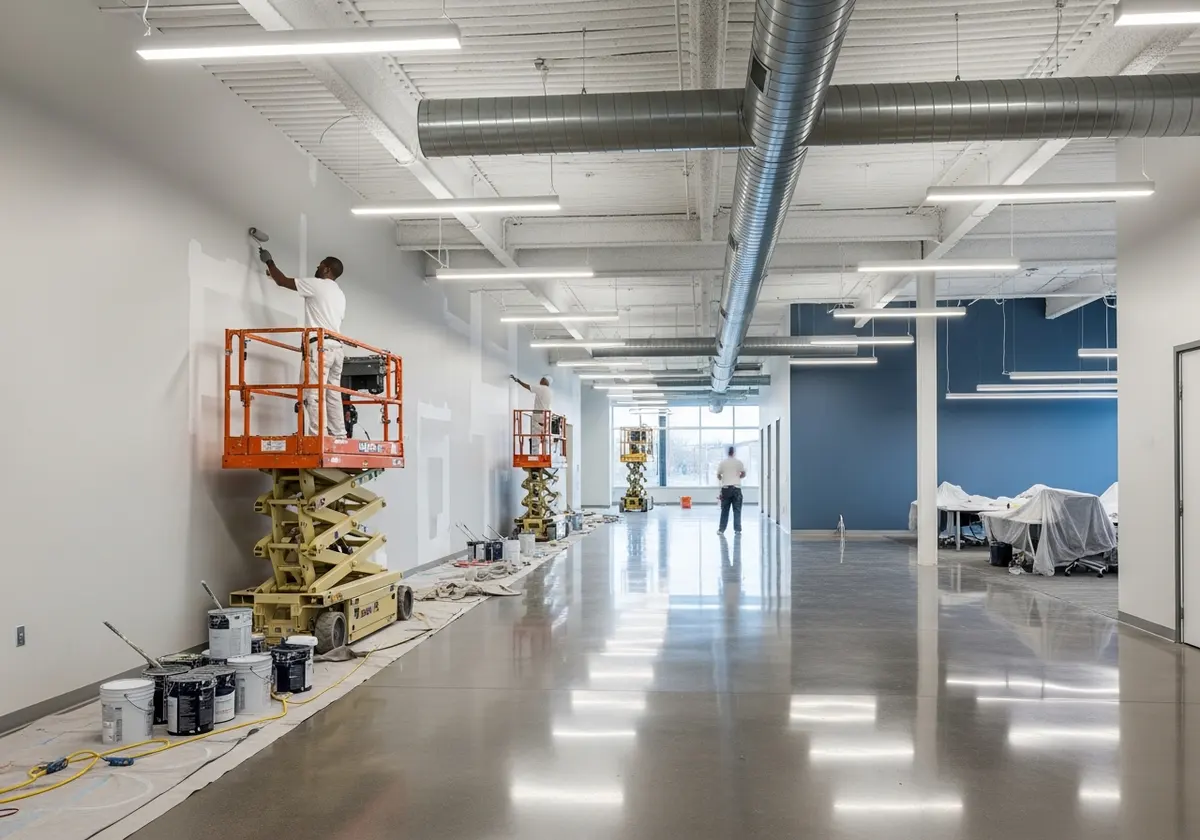
Commercial projects routinely involve tens of thousands of square feet, tall ceilings, and multi-story exteriors. That requires industrial equipment — airless and electrostatic sprayers, boom and scissor lifts, swing stages, scaffolding, and pressure washing rigs — and larger, coordinated crews. A residential painter with a ladder and a few rollers is simply not equipped for a 40-foot warehouse wall or a high-rise facade.
Coatings and substrates
Homes are mostly drywall, wood trim, and a little masonry. Commercial buildings present concrete block, poured concrete, structural steel, aluminum, galvanized metal, EIFS, brick, and specialty substrates, each requiring a matched coating system. Commercial painters work with performance products — epoxies, urethanes, elastomerics, DTM acrylics, and intumescents — that residential crews rarely handle.
Project management and compliance
A commercial job is a project, not a visit. It involves written specifications, submittals, schedules, safety plans, insurance and bonding, and often coordination with general contractors, architects, and building owners. Compliance with OSHA safety standards and environmental rules on coatings and disposal is mandatory, with real legal and financial consequences for violations.
Liability and accountability
A failed residential paint job is an inconvenience; a failed commercial coating can shut down a production line, expose a hospital to infection control problems, or void a building warranty. The accountability is correspondingly higher. Commercial contracts spell out liability, insurance, warranty terms, and remedies, and the contractor is expected to stand behind documented film thickness, coverage, and product specifications. This is why commercial firms invest in trained crews, quality-control documentation, and project managers who oversee each phase rather than leaving outcomes to chance. The owner, in turn, gains a single accountable partner who is responsible for the entire result, from substrate preparation through final inspection and warranty service, rather than a loose collection of subcontractors.
| Factor | Residential | Commercial |
|---|---|---|
| Typical scale | 1-3,000 sq ft | 5,000-500,000+ sq ft |
| Crew size | 1-4 painters | 4-30+ painters |
| Substrates | Drywall, wood, some masonry | Concrete, steel, EIFS, metal, masonry |
| Coatings | Acrylic latex, enamel | Epoxy, elastomeric, DTM, intumescent |
| Access | Ladders, small scaffolds | Lifts, swing stages, scaffolding |
| Scheduling | Daytime, homeowner present | After-hours, phased, around operations |
| Compliance | Basic licensing | OSHA, bonding, environmental, prevailing wage |
Match the contractor to the scope
Industries and Facilities Served
Every commercial sector has distinct requirements that shape coating selection, scheduling, and finish standards. A hospital corridor, a luxury hotel lobby, and a food-processing plant could not be more different in their priorities, and an experienced commercial painter tailors the approach to each. Below are the most common environments and what they demand.
Office and corporate
Offices prioritize clean, professional aesthetics, low-odor coatings, and minimal disruption to employees. Work is frequently done in phases or after hours, with washable eggshell and satin finishes on walls and durable enamels on doors and frames. Conference rooms and lobbies often feature accent colors that reinforce brand identity.
Retail and hospitality
Stores, restaurants, and hotels live and die by appearance. Finishes must look flawless, resist heavy customer traffic, and be refreshed on tight timelines that avoid lost revenue. Fast-drying, low-VOC products let a restaurant or boutique reopen quickly, and color is tightly coordinated with the brand and interior design.
Healthcare and education
Hospitals, clinics, and schools require hygienic, easily disinfected surfaces, often using anti-microbial coatings and finishes that withstand aggressive cleaning. Low-VOC products and careful containment protect sensitive occupants. Work is scheduled around patient care or class schedules, frequently overnight, on weekends, or during breaks.
Industrial and warehouse
Factories, distribution centers, and warehouses demand performance over polish. Coatings must resist abrasion, chemicals, forklift traffic, and temperature swings. Epoxy and urethane floor systems, DTM coatings on steel, safety striping, and high-visibility markings are standard. Ceiling and deck painting in tall structures requires specialized lift equipment and dust control.
- Multi-family and property management — common areas, corridors, stairwells, and unit turns on recurring maintenance schedules.
- Government and institutional — projects that may carry prevailing-wage, bonding, and certified-payroll requirements.
- Religious and cultural — high ceilings, ornate detail, and restoration-grade finishes.
Across all of these sectors, the contractor's job is to translate the facility's operational reality into a coating plan. A 24-hour distribution center cannot tolerate a fully closed aisle; a surgical suite cannot tolerate dust or strong odors; a busy restaurant cannot afford to lose a Friday night. Matching the right coatings, crew size, and schedule to each environment is what separates a smooth project from a disruptive one. When evaluating a contractor, ask specifically about their experience in your sector and how they have handled the operational constraints unique to facilities like yours.
Sector-specific finish standards
- Healthcare — epoxy or anti-microbial finishes in procedure areas, seamless cove bases, and coatings that survive hospital-grade disinfectants without chalking or yellowing.
- Food and beverage — washable, mold-resistant coatings that meet sanitation requirements and tolerate frequent high-pressure wash-downs.
- Education — durable, scrubbable wall finishes in corridors and high-impact coatings on lockers, rails, and door frames, applied during summer or holiday breaks.
- Hospitality — designer-grade smoothness on guest-room walls and lobbies, with phased room blocks to protect occupancy.
- Industrial — corrosion-resistant DTM systems, safety color coding, and OSHA-compliant aisle and hazard striping.
How Much Does Commercial Painting Cost?
Commercial painting is most often priced by the square foot of surface area, though large or complex projects may use linear-foot rates for elements like railings and fencing or a lump-sum price for a defined scope. In the United States, interior commercial work generally runs $1 to $4 per square foot and exterior work $1.50 to $5 per square foot, including labor and standard materials. Large, open, low-detail spaces such as warehouses can fall below $1 per square foot, while detailed interiors, high ceilings, and specialty coatings push well above $6.
| Project Type | Typical Cost Range | Notes |
|---|---|---|
| Office interior (per sq ft) | $1 – $4 | Walls, ceilings, trim |
| Retail / restaurant interior | $2 – $5 | Higher finish standard |
| Warehouse interior (per sq ft) | $0.50 – $2 | Open, high ceilings |
| Commercial exterior (per sq ft) | $1.50 – $5 | Substrate-dependent |
| Epoxy floor coating (per sq ft) | $3 – $12 | Prep and system-dependent |
| Elastomeric masonry (per sq ft) | $2.50 – $6 | Waterproofing system |
| Structural steel (per sq ft) | $2 – $8 | DTM or intumescent |
| Line striping (per linear ft) | $0.30 – $1 | Parking and safety |
What drives commercial painting prices
- Building height and access — lifts, swing stages, and scaffolding add equipment rental and labor.
- Surface condition — corrosion, cracking, peeling, and water damage add prep hours and repair cost.
- Coating system — performance coatings cost more per gallon and often require multiple engineered coats.
- Scheduling constraints — after-hours, overnight, and phased work carries premium labor rates.
- Square footage and complexity — large, simple areas are cheaper per foot; detailed, multi-color spaces cost more.
- Regulatory requirements — prevailing wage, bonding, certified payroll, and containment raise costs on public work.
Prepare a clear scope using our quote comparison checklist. Confirm service area, credentials and availability directly with any contractor. Directory listings are being restored.
The lowest bid is rarely the cheapest
Bidding, Contracts, and Payment Structures
Once you have selected a coating approach, the next decision is how the work is priced and paid for. Commercial painting is governed by a formal agreement, and the contract structure you choose shapes who carries the risk of surprises, how change orders are handled, and how much oversight the project demands from your team. The three most common pricing models are fixed-price (lump-sum), time-and-materials, and unit-price contracts, and each fits a different kind of project.
Fixed-price vs. time-and-materials vs. unit price
A fixed-price contract sets one number for a fully defined scope, shifting the risk of overruns to the contractor and giving the owner budget certainty — ideal when the surfaces, coatings, and conditions are well understood. A time-and-materials (T&M) contract bills actual labor hours plus the cost of materials with a markup, which suits open-ended repair, restoration, or projects where the extent of damage cannot be seen until prep begins. Unit-price contracts set a rate per square foot, per door, or per linear foot so areas can be added or removed without renegotiating the whole agreement, which is common on large multi-building or recurring portfolios.
| Structure | Best For | Owner Risk | Typical Retainage |
|---|---|---|---|
| Fixed-price (lump sum) | Well-defined scope | Low | 5 – 10% |
| Time & materials | Unknown or evolving scope | Higher | Often none |
| Unit price | Repetitive or phased work | Moderate | 5 – 10% |
| Cost-plus (GMP) | Fast-track, collaborative | Moderate | 5 – 10% |
Payment terms, retainage, and progress billing
Larger projects rarely pay in one lump at completion. Expect a deposit or mobilization payment of 10 to 30 percent, progress billing tied to completed phases or a percentage of the work, and a final payment on acceptance. Owners commonly withhold retainage of 5 to 10 percent until the punch list is signed off, which protects you against incomplete work. On public and many private jobs, this is governed by lien and prompt-payment statutes, so confirm release timing in writing.
- Schedule of values — a line-item breakdown of cost by area or phase that supports each progress invoice.
- Change-order process — written pricing and approval before any added scope proceeds, never a verbal hand-shake.
- Lien waivers — conditional and unconditional waivers collected with each payment to protect against subcontractor claims.
- Allowances and exclusions — clearly stated so unforeseen repairs do not become billing disputes later.
Prepare a clear scope using our quote comparison checklist. Confirm service area, credentials and availability directly with any contractor. Directory listings are being restored.
Tie payments to milestones, not the calendar
Specialty Commercial Coatings
The defining feature of commercial painting is the breadth of engineered coatings available, each formulated for a specific performance challenge. Choosing the right system is a technical decision that affects durability, safety, hygiene, and code compliance far more than color does. Below are the workhorse categories every facility manager should recognize.
Epoxy coatings
Epoxy is a two-component, high-build coating prized for hardness, chemical resistance, and abrasion resistance. It is the standard for warehouse and garage floors, manufacturing areas, commercial kitchens, and walls in wash-down environments. Epoxy creates a seamless, easily cleaned surface that resists oils, solvents, and heavy traffic. For a deeper look at floor systems, see our epoxy flooring guide.
Elastomeric coatings
Elastomeric coatings are thick, flexible, waterproofing films applied to masonry, stucco, concrete, and EIFS. They bridge hairline cracks, flex with the building, and form a weather-resistant barrier that protects the envelope from wind-driven rain. They are a frequent choice for exterior walls in climates with heavy moisture or freeze-thaw cycles.
Intumescent and fire-resistant coatings
Intumescent coatings swell into an insulating char when heated, slowing the rate at which structural steel loses strength in a fire. They are often required by code to achieve a rated fire-resistance level on exposed columns and beams. Because protection depends on a tested film thickness, these systems must be installed by trained applicators who measure and document the build.
Anti-microbial coatings
Anti-microbial paints incorporate additives that inhibit the growth of bacteria, mold, and mildew on the coating surface. They are common in hospitals, clinics, food-processing plants, and other settings where hygiene is critical, and they pair well with durable, scrubbable finishes that withstand frequent disinfection.
Direct-to-metal (DTM) coatings
DTM coatings bond directly to prepared steel and aluminum without a separate primer, providing corrosion protection and a finished appearance in fewer steps. They are used on structural steel, railings, handrails, doors, frames, and metal siding, and modern waterborne DTM acrylics offer low odor with strong durability.
| Coating | Primary Benefit | Common Application |
|---|---|---|
| Epoxy | Chemical & abrasion resistance | Floors, kitchens, wash areas |
| Elastomeric | Waterproofing & crack-bridging | Masonry, stucco, EIFS exteriors |
| Intumescent | Fire-resistance rating | Structural steel columns & beams |
| Anti-microbial | Inhibits mold & bacteria | Healthcare, food processing |
| DTM acrylic | Corrosion protection | Steel, aluminum, railings, doors |
| Polyurethane | UV & gloss retention | High-wear floors, topcoats |
Manufacturers regulate the volatile organic compound (VOC) content of these coatings, and many regions limit VOCs for air-quality reasons. The U.S. EPA on indoor air quality provides guidance on low-emission products that is especially relevant for occupied offices, schools, and healthcare facilities.
The Professional Commercial Painting Process
A reputable commercial contractor follows a structured, documented process from first site visit to final closeout. Understanding the sequence helps facility managers evaluate bids, hold crews accountable, and recognize when corners are being cut. The steps below mirror the workflow professional firms use on projects of every size.
- Site assessment and scope. The contractor walks the facility, measures all surfaces, identifies substrates, documents damage and problem areas, and defines the complete scope before pricing.
- Specification and bid. Coatings, colors, prep level, number of coats, and access methods are specified, then priced by square foot, linear foot, or lump sum in a written proposal.
- Scheduling and logistics. Work is scheduled after-hours or in phases, with staging, parking, security, and safety plans coordinated so the business keeps operating.
- Protection and setup. Floors, fixtures, equipment, merchandise, and landscaping are masked and covered, and active work zones are isolated from occupied areas.
- Surface preparation. Surfaces are cleaned, repaired, sanded or abraded, rust is removed, and bare or patched areas are primed so coatings bond and last.
- Priming. The correct primer or sealer is applied to each substrate for adhesion, corrosion protection, and uniform appearance.
- Coating application. Primer and finish coats are applied by spray, roll, or brush to the specified film thickness, maintaining a wet edge and consistent build.
- Inspection and touch-up. The contractor and facility manager inspect each zone under good light, verify coverage and film thickness, and complete any touch-ups.
- Cleanup and closeout. Areas are restored, waste is disposed of per regulations, and documentation, warranties, and a maintenance plan are delivered.
On larger projects, this process is supported by submittals, daily progress reports, and safety toolbox talks. A contractor who can describe each phase in detail and provide references for similar buildings is demonstrating the project-management maturity that separates true commercial firms from oversized residential crews.
Documentation deserves special emphasis. On performance-critical work such as floor systems, structural steel, and fire-resistive coatings, the contractor should record ambient conditions, surface profile, mil-thickness readings, and product batch numbers as the job proceeds. This paper trail protects you if a warranty claim ever arises and proves that the coating was installed to specification. Reputable firms provide this closeout package as a matter of course, along with touch-up materials and a written maintenance recommendation so your team can preserve the finish between major service intervals.
Scheduling and Minimizing Business Disruption
The single biggest concern for most commercial clients is not the paint — it is downtime. A capable contractor builds the entire project around keeping your facility operational and your customers, patients, or employees safe and undisturbed. The goal is a finished result that appears to happen invisibly, between shifts and behind barriers.
After-hours and overnight work
Retail stores, restaurants, offices, and healthcare facilities often schedule painting after closing, overnight, or on weekends. Crews arrive as the space empties, complete a defined zone, and ensure coatings are dry and the area is reset before the business reopens. Fast-drying, low-odor coatings make same-day turnaround realistic for many spaces.
Phased and zoned work
For buildings that never fully close, contractors divide the project into zones and complete one area at a time behind temporary barriers and signage. Warehouses keep operating around a sectioned-off bay; an office repaints one floor or wing per phase; a hotel handles a block of rooms at a time. Phasing keeps revenue flowing while work proceeds.
Low-odor and fast-cure products
Product selection is a scheduling tool. Low-VOC and low-odor coatings reduce complaints and let occupied areas remain in use. Fast-cure floor systems such as polyaspartics can return a space to service in a day rather than several. Matching the product to the occupancy schedule is part of good planning.
Communication and notice
Smooth commercial projects are built on communication. Employees, tenants, and customers should know in advance which areas will be worked on and when, where to park, and what to expect in terms of noise, odor, and access. Clear signage, advance email notices, and a posted schedule prevent confusion and complaints. A contractor who proactively communicates the daily plan and confirms the next day's zones with your point of contact keeps surprises to a minimum and builds the trust that keeps a multi-week project running on time and on budget.
Designate a single point of contact
Project Management and Stakeholder Communication
On a commercial job, the painting itself is only part of the work; the rest is coordination. A mid-size repaint can involve a building owner, a property or facilities manager, a general contractor, tenants, employees, security staff, and the painting crew — each with different priorities and schedules. Strong project management is what keeps those interests aligned so the work finishes on time, on budget, and without friction. The larger the building, the more this discipline determines success.
Who is involved and what they need
- Owner / asset manager — wants budget certainty, documented quality, and protection of property value.
- Facilities / property manager — needs minimal disruption, clean work zones, and reliable scheduling.
- General contractor — coordinates painting with other trades on new construction or build-outs.
- Tenants and employees — need advance notice of noise, odor, access changes, and parking impacts.
- Security and operations — control after-hours access, alarms, and badging for the crew.
The communication cadence that prevents surprises
Well-run projects rely on a predictable rhythm of communication rather than ad-hoc phone calls. That usually means a pre-construction meeting to confirm scope and logistics, a posted schedule of zones and dates, short daily check-ins between the crew lead and your point of contact, and a weekly progress report on larger jobs. Each report should capture completed areas, the next day's plan, any access needs, and open issues awaiting a decision. Documenting these in writing — even a brief shared log or email thread — creates an audit trail that resolves disputes quickly and keeps every stakeholder working from the same information.
Tracking progress and closing out
Project managers track progress against the schedule of values, flagging slippage early so phasing can be adjusted before it affects your operations. Near completion, the team walks each zone to build a punch list of touch-ups, which must be cleared before final acceptance and release of retainage. A complete closeout package — as-applied product data, color and sheen records, warranty documents, and leftover touch-up materials — hands your facilities team everything needed to maintain the finish for years. When evaluating firms, ask who will manage your project day to day and how they report progress; the answer reveals whether you are hiring a coordinated commercial operation or an oversized crew. You can compare project-managed firms by browsing commercial painters in your city.
Insist on one named project manager
Surface Preparation on Commercial Substrates
As with any coating work, preparation determines how long a commercial finish lasts — but the stakes and the methods are larger. Commercial substrates range from porous concrete block to corroded steel, and each requires a specific preparation method to ensure the coating bonds and performs for years rather than months. Skipping prep is the most common cause of premature, expensive failure.
Cleaning and degreasing
Commercial surfaces accumulate dirt, grease, mildew, efflorescence, and industrial residue. Crews pressure wash exteriors and degrease interiors so coatings can adhere. For exteriors, pressure washing is often a project in itself; see our pressure washing guide for how surface cleaning supports a lasting finish.
Repair and patching
Cracks in masonry and stucco, spalled concrete, damaged drywall, and failed caulk joints are repaired before coating. On exteriors, waterproofing details and joint sealants are restored to keep moisture out of the building envelope.
Corrosion and metal prep
Steel must be cleaned of rust and mill scale by wire brushing, grinding, or abrasive blasting to the standard the coating manufacturer specifies. Proper metal prep is essential for DTM and industrial coatings to provide their full corrosion protection.
Concrete profiling and moisture testing
Before floor coatings, concrete is mechanically profiled by grinding or shot blasting to open the surface, and moisture is tested. Excess moisture vapor will delaminate an epoxy or urethane floor, so testing and, when needed, a moisture-mitigation primer are critical steps.
Containment and dust control
Preparation on a working facility must be contained. Sanding, grinding, and blasting generate dust that can contaminate sensitive equipment, merchandise, food-preparation areas, and patient spaces. Professional crews use plastic containment, negative-air machines, vacuum-shrouded tools, and floor protection to keep debris confined to the work zone. In older buildings, containment is also a regulatory requirement when lead or other hazardous coatings may be disturbed, making proper dust control both a quality and a compliance issue.
Surface preparation standards to specify
On performance work, prep is not subjective — it is governed by written standards that the coating manufacturer references in its warranty. For steel, the Society for Protective Coatings (SSPC) and NACE define cleanup levels from hand-tool cleaning (SP 2) and power-tool cleaning (SP 3) to commercial blast (SP 6) and near-white blast (SP 10), each removing progressively more contamination. For concrete floors, the International Concrete Repair Institute defines Concrete Surface Profiles (CSP 1-9) that dictate how aggressively the slab must be ground or shot-blasted for a given coating thickness. Naming the required standard, the target dry film thickness in mils, and acceptable moisture limits in the contract removes ambiguity and gives you a measurable basis to accept or reject the prep before any finish coat is applied.
Safety, Compliance, and the Environment
Commercial painting operates under a web of safety and environmental regulations that residential work largely avoids. A professional contractor treats compliance as a core competency, not an afterthought, because violations carry fines, liability, and stop-work risk. As a client, you should confirm a contractor's safety program before hiring.
Worker safety and OSHA
Working at height, on lifts and scaffolds, with sprayers and solvents, and in confined spaces introduces serious hazards. Contractors must follow OSHA standards for fall protection, respiratory protection, ladder and scaffold safety, hazard communication, and confined-space entry. A documented safety program and trained crews protect both workers and your business from liability.
Lead and older buildings
Buildings constructed before 1978 may contain lead-based paint, which must be handled under federal lead-safe rules to protect occupants and workers. The EPA lead program governs renovation, repair, and painting practices, including containment, safe removal, and certified firms. Never disturb suspect coatings without proper testing and containment.
VOCs, disposal, and runoff
Environmental rules limit the VOC content of coatings and govern the disposal of paint, solvents, and wash water. Crews must contain and dispose of waste responsibly and prevent contaminated runoff from entering storm drains, consistent with EPA stormwater (NPDES) guidance. Responsible disposal protects both the environment and your business from regulatory exposure.
Verify insurance and bonding first
Sustainability, Low-VOC, and Green Coatings
Environmental performance has moved from a nice-to-have to a procurement requirement on many commercial projects. Coatings affect indoor air quality, contribute to a building's environmental certification, and carry disposal obligations long after the crew leaves. For owners pursuing green-building goals — or simply protecting the health of occupants — coating selection is a meaningful lever, and modern low-emission products perform on par with their conventional predecessors.
Low-VOC and zero-VOC coatings
Volatile organic compounds are the solvents that off-gas from drying paint, producing odor and degrading air quality. Conventional coatings historically ran 250 grams per liter or higher; today low-VOC products typically fall at or below 50 g/L and zero-VOC formulations below 5 g/L. Choosing these in occupied offices, schools, and healthcare settings lets spaces be reoccupied faster and reduces complaints, while still delivering the washability and durability commercial environments demand.
How coatings contribute to LEED and certification
Under the U.S. Green Building Council's LEED rating system, low-emitting coatings can support Indoor Environmental Quality credits when they meet established VOC-content and emissions limits. To document compliance, contractors retain product data sheets, third-party certifications, and records showing applied quantities. Specifying qualifying products from the outset — and keeping the paperwork — is what turns a routine repaint into a contribution toward certification rather than a missed opportunity.
- Third-party labels — look for GreenGuard Gold, Green Seal GS-11, or Master Painters Institute (MPI) X-Green listings.
- Emissions vs. content — VOC content limits the solvent in the can; emissions testing measures what off-gasses after application. Credits often require both.
- Recycled-content and durable systems — longer-lived coatings reduce repaint frequency and lifecycle waste.
- Responsible disposal — leftover paint, solvents, and wash water must be recycled or disposed of per local hazardous-waste rules.
Beyond certification points, durable green coatings carry a real lifecycle benefit: a system that lasts 12 years instead of 7 means fewer repaints, less embodied material, and less disruption over the life of the building. When comparing proposals, ask contractors to list the specific low-emitting products they intend to use and the certifications those products hold, and confirm they will provide the documentation your sustainability team needs.
Specify green products in the bid documents
Commercial Maintenance Programs
The smartest commercial clients treat painting as ongoing asset management rather than a one-time event. A scheduled maintenance program keeps facilities looking sharp, extends the life of coatings, and spreads cost into predictable budgets instead of large, disruptive repaints. Proactive maintenance is almost always cheaper than reactive repair.
Why a maintenance program pays off
High-traffic areas — entrances, corridors, restrooms, and break rooms — wear far faster than the rest of a building. Addressing scuffs, chips, and fading with periodic touch-ups prevents small problems from becoming full repaints. Catching coating failures early on exteriors stops moisture from reaching the substrate and causing costly structural damage.
What a program typically includes
- Scheduled inspections — periodic walkthroughs to document wear and prioritize touch-ups.
- High-traffic touch-ups — refreshing corridors, lobbies, and restrooms on a 1-3 year cycle.
- Exterior recoat planning — budgeting full repaints on a 7-15 year horizon based on substrate and climate.
- Color and product records — maintaining a documented palette and product list for consistent touch-ups.
| Area | Expected Service Life | Refresh Interval |
|---|---|---|
| Office interiors | 5 – 10 years | Touch-ups as needed |
| High-traffic corridors | 2 – 4 years | Periodic touch-ups |
| Exterior masonry / stucco | 7 – 15 years | Recoat at end of life |
| Epoxy floors | 10 – 20 years | Topcoat at mid-life |
| Structural steel coatings | 10 – 20 years | Spot repair ongoing |
Keep a documented color schedule
Budgeting maintenance as a recurring line item
Prepare a clear scope using our quote comparison checklist. Confirm service area, credentials and availability directly with any contractor. Directory listings are being restored.
Color, Branding, and Environment
In commercial spaces, color is a business tool, not just decoration. The right palette reinforces brand identity, shapes how customers and employees feel, and signals professionalism. Color choices should be coordinated with brand guidelines, interior design, lighting, and the function of each space rather than chosen on instinct.
Brand consistency
Retailers, franchises, and corporate offices often have defined brand colors that must appear consistently across locations. A commercial painter can color-match brand standards precisely and document the formulas so every site and every future touch-up stays on-brand.
Psychology and function
Color influences behavior and perception. Calming blues and greens suit healthcare and wellness spaces; energetic accents work in fitness and entertainment venues; warm neutrals create welcoming hospitality interiors; and high-contrast safety colors mark hazards in industrial settings. Sheen matters too — washable satin and semi-gloss hold up in high-traffic public areas.
Lighting and large surfaces
Color reads differently on a vast commercial wall than on a small swatch, and fluorescent, LED, and daylight sources shift its appearance. Test large samples under the building's actual lighting before committing, because a repaint at commercial scale is expensive to redo. For inspiration on interior finishes, our interior painting guide covers sheen and color strategy in depth.
How to Choose a Commercial Painting Contractor
Selecting the right contractor is the most important decision in any commercial project. The cost of a failed coating or a botched schedule on a working facility is steep, so qualifications matter far more than the lowest number on a bid sheet. Use the following framework to vet candidates thoroughly before you sign.
Verify credentials and coverage
Confirm the contractor holds the licenses your state and municipality require and carries current general liability and workers' compensation insurance. Request a certificate of insurance naming your business as additional insured, and for large or public projects, confirm bonding capacity. Skipping this step exposes you to serious liability.
Demand relevant commercial experience
Ask for references and a portfolio of projects similar to yours in size, substrate, and industry. A contractor who has coated warehouses, hospitals, or retail centers like yours understands the coatings, scheduling, and compliance involved. Visit a completed project or speak to a past client about quality and disruption.
Scrutinize the proposal
- Detailed scope — every surface, coat, product, and prep step spelled out, not vague line items.
- Schedule and phasing — a clear plan for working around your operations.
- Safety plan — documented OSHA compliance and a trained crew.
- Warranty — written coverage on labor and materials, with terms you understand.
- Communication — a named project manager and a clear change-order process.
Prepare a clear scope using our quote comparison checklist. Confirm service area, credentials and availability directly with any contractor. Directory listings are being restored.
Common Commercial Painting Mistakes
Most commercial painting failures trace back to a handful of avoidable errors. Knowing them helps facility managers ask the right questions and steer projects away from costly rework. The following mistakes appear again and again on troubled jobs.
Choosing the wrong coating
Applying a standard wall paint where a performance coating belongs — or the wrong coating for a substrate — guarantees early failure. Epoxy on uncured concrete, ordinary paint on rusted steel, or non-elastomeric coatings on cracking masonry all peel, blister, or delaminate. Match the system to the surface and the demands of the space.
Skipping or rushing preparation
Inadequate cleaning, failure to remove rust or mill scale, ignoring moisture in concrete, and painting over failing existing coatings are the leading causes of premature failure. No coating outperforms its preparation, and prep shortcuts always surface within months.
Underestimating disruption and logistics
A contractor who has not planned phasing, access, and scheduling will stall your operations and blow the timeline. Confirm a realistic schedule, staging plan, and communication process up front.
Hiring on price alone
The cheapest bid often hides thin prep, fewer coats, cheaper products, or missing insurance. On a commercial building, the rework cost of a failed job — re-mobilizing equipment, re-closing areas, and lost revenue — far exceeds any initial savings. Weigh qualifications and scope, not just the number.
Get everything in writing
Frequently Asked Questions
Related Painting Guides

Cabinet Refinishing
Refresh a kitchen for a fraction of replacement cost — the pro spray-finish process explained.
Deck & Fence Staining
Stain vs. seal, prep, product choice, and timing to protect wood for years.
Wallpaper & Drywall
Wallpaper removal and drywall repair done right so your new paint lays flawless.
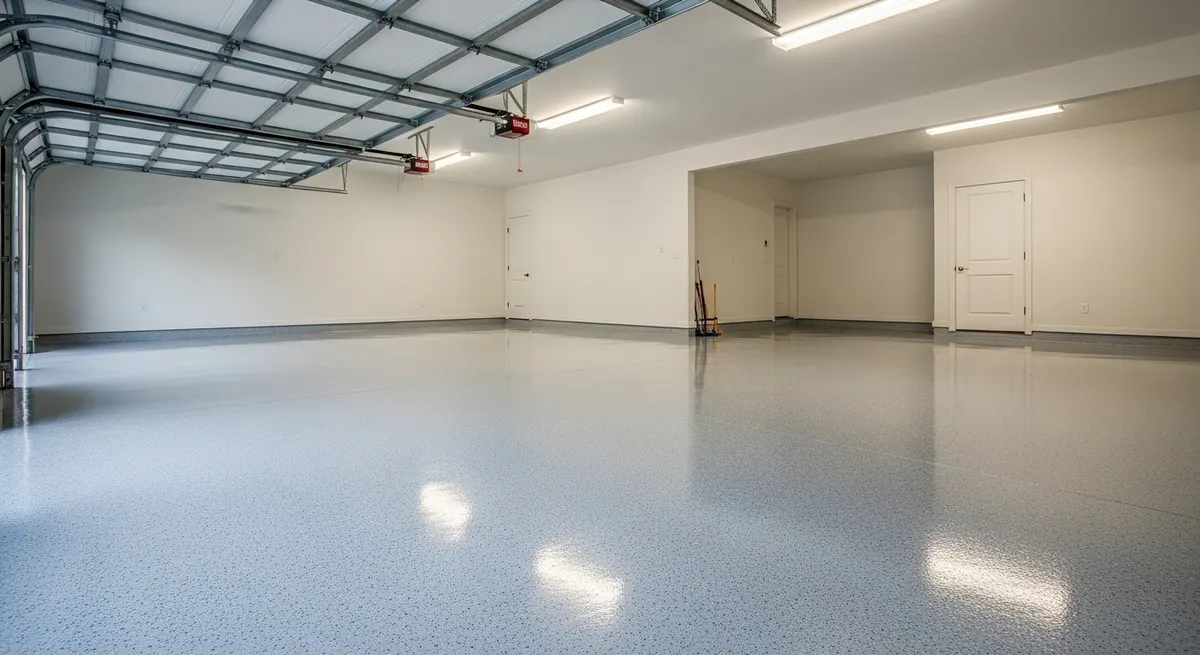
Epoxy Flooring
Durable, beautiful epoxy floor coatings for garages and shops — systems, cost, and longevity.
Prepare your project brief
Build a clear scope to discuss with a contractor. Directory listings are being restored; this does not confirm local availability.